nature

The Back Roads

In the Allegheny Mountains of Northwestern Pennsylvania, outside of a tiny town called Tionesta, if you take a gravel road back a couple of miles, you will find a small cabin with a big screened-in porch at the end of the road that settles into a hillside, overlooking a manmade pond stocked with native fish. You’d see a salt lick to the north and south of the cabin, gleaming from squat stumps and attracting the crepuscular neighbors and a few stray porcupines. There is a field of clover for the deer, a fire pit with grates above it for roasting hand pies (Wonderbread and butter with a heap of canned pie filling in the center) or making “hobo” dinners (a less PC name for vegetables stacked in tin foil). Tucked around the woods are small forts built of plywood and logs, and often have makeshift fences built by 12 year olds. A spring runs from the mountain above, down to supply the cabin, and draining into the lake, which overflows to a stream below that, and empties in a larger tributary into the Allegheny River. On the gravel road you took, you may be slapped with birch branches as you drive by, some stripped of a twig or two where a little hand has removed it and chewed it down to the pulp, letting the sweetness of the green pith sap flood the tastebuds as a tie-over til lunch or dinner. You may also see blackberry bushes stretching their brambles toward you, daring you to trade the reward of the fat, bursting berries for a few pricks in your skin. There are three fingered alien hand leaves of sassafras, waiting their turn to have a piece of their roots dug up and boiled into a blood thinning winter tea, light pink with milk and sugar.

Veer off of the main gravel road and its treasures, taking a left onto a footpath after the first high meadow– the only place on the mountain where enough cell phone service can be garnered for a midnight phone call to a boyfriend back in civilization, if you can steel yourself against the rustling of leaves and trees in the dark. Go near the mound that is colloquially known as the fox den (and for good reason– foxes are often spotted here). If you choose this path in August and maybe early September, and if you look down among the scrubby brush, before your eyes land on the soft pine needles below, you will be rewarded with an abundance of huckleberries. At first, you might not see them. They don’t shimmer like the blackberries, and often have a matted, muted tone to them, blending into the small green leaves that protect them. But once your eye is trained, suddenly a kingdom arises from the late summer green, and your mouth will salivate and pucker and pop with the stunning delight of a warm huckleberry. They are at once the taste of summer and the harbinger of fall, a burst of daylight as the moon is rising.

If you fill your pockets and don’t become too greedy, neatly plopping one or two at a time in your mouth as you walk, you can take this back road– this well trodden path– all the way down to the cabin without ever touching the road. It’s easy enough for me, as I’ve taken it a hundred times, both in my body and in my mind. I’ve taken it at night and in the day, in early morning and at dusk. This is a path that has formed the shape of my shoes and the roundness of my desire to return– a desire as full and poignant as a huckleberry.

In early September, at the break of the weather from summer to fall– I love a good break in the weather– I traveled this road again for the first time in two decades, on a small wooded path in Long Beach, Washington, where an accretion of land meets the Pacific Ocean. Halfway to the dune grass, the path splits, and a rusted chandelier hangs on a low hanging branch, beside which is a huckleberry bush as tall as I am. These aren’t the scrubby spreading kind of my childhood, but the taste is the same. Each morning and evening I took this walk for a week, grabbing a few huckleberries each time, leaving plenty for the bears behind. I took a few extra and clumped them lavishly on my oats one morning, with real maple syrup from my friend’s trees in Vermont– another well trodden path. I luxuriated in the simplicity of time, how it is not linear or singular, but circular and plural and not confined by place.

I would like to reduce the sensation to nostalgia. I would like to diminish this exploration as a self-indulgent journey into the past. But I am not listening to the Spice Girls records (well, most of the time) and I am not squeezing myself into old JNCO jeans, or even swooning over the sight of an old yellow Ford Ranger like the one I drove through high school and college.

I am finding the back roads of myself. It’s more trepidatious, as it requires not only a journey back, but a new path forged forward.
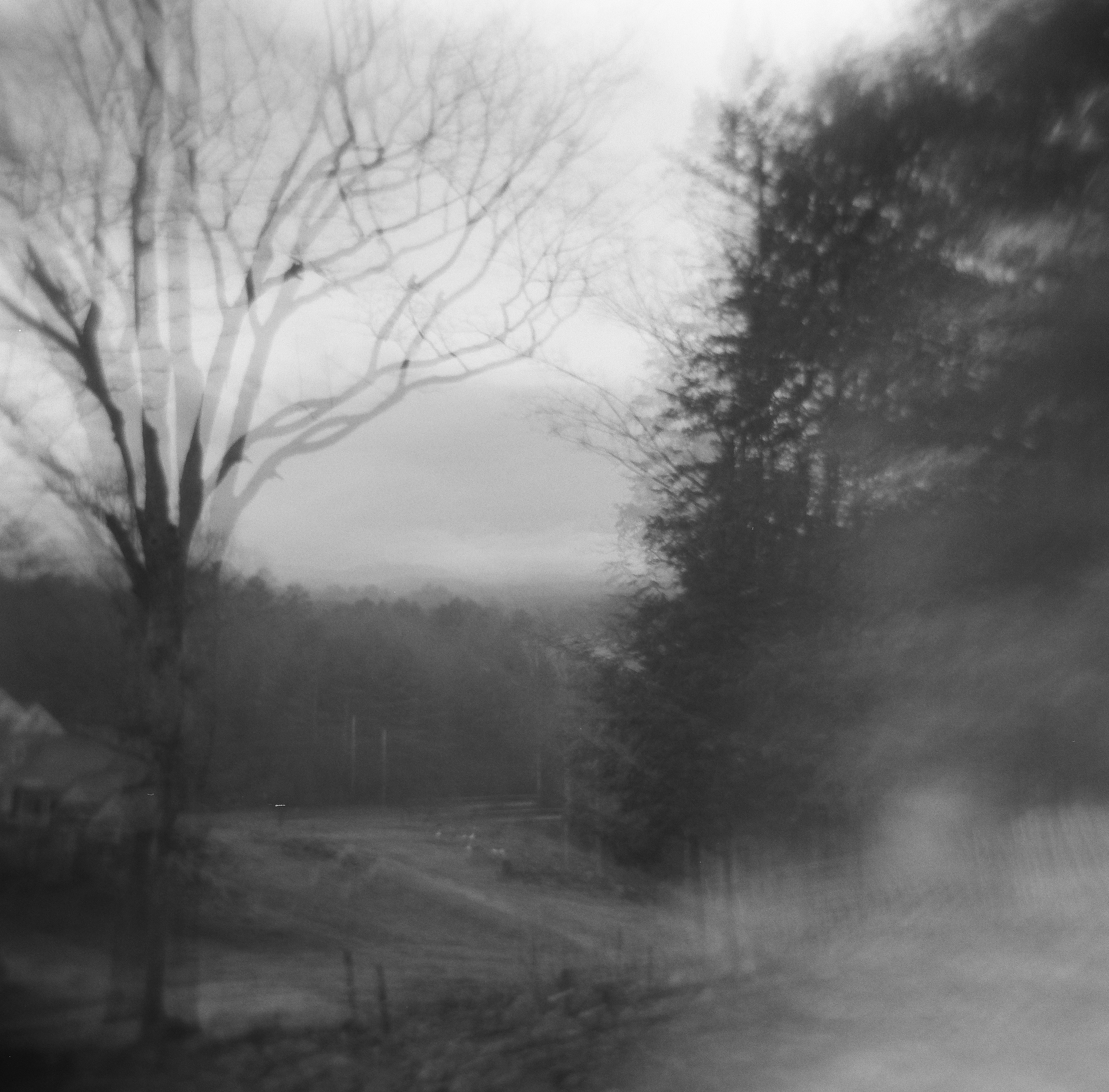
In a white house on a hill by the Connoquenesing Creek outside of a small shut-down steel town 45 miles north of Pittsburgh, you will see a light on in the east facing gable, warm and early and laced with white curtains. Climb into the room, and there is a captured attic bedroom with a sloping ceiling next to a twin bed, mauve and magenta carpeting that splits into baby blue at the doorway. The walls are a pale pink, and covered with drawings and writings and handprints of a teenage girl and her two best friends, who spent a whole sleepless night painting and eating snacks and having one last stab at childhood while looking into the dark open mouth of their graduation.

The shelves are lined with books and journals filled to capacity, the dresser topped with trinkets– pink glass bears and dried roses– from ex-boyfriends, and the closet stuffed with CDs both bought and gifted and rotated evenly in the prominently displayed stereo in the next room. In the glow of this morning, you will find a teenage girl huddled under her blankets, a white cup with a rainbow streaked across– her mother’s favorite mug– of black tea, tan with milk and sugar resting on the nightstand her father built beside her. On her lap, a half filled journal, black faux leather with an illustration of a blue iridescent feather quill on the front. It cost more than $30, and she saved for weeks to buy it at Barnes & Nobles, checking every weekend that it was still there. Once purchased, she did not hesitate to use it. Empty books are meant to be filled, not cherished for their clean start, as eventually, a clean start is only the burden of not starting at all. Next to her is an open Bible, somewhere in the Corinthians. This is likely her third or fourth time through this book. She sometimes wakes up with nightmares about Nebuchadnezzar and fires from the book of Daniel, or with visions of swords and horses from Revelation, but she persists, and is determined to crack the code of herself through this singular text. She won’t find out for several years that this text was created by people– men– who knew nothing about the sacred heart of a spiritual seeker, and especially nothing about women, and that in fact the text she was reading was not meant to help her, but to imprison her– to keep her in line. But this vignette has little to do with that. It has everything to do with a warm lamp and a curious spirit.

This back road of myself has been recently reopened. I’ve exchanged coffee for tea; Marcus Aurelius for the Bible; a journal I’ve made myself– a complicated historical stitch and handmade paper– for the mass produced one I determined special. This road is comfortable and confronting, with few guard rails and several connecting dirt roads. It’s slow, full of potholes and speed bumps, and dappled with a forest of thought that makes me believe the outside world is out there, up there somewhere. But it isn’t intruding right now. Here, I can almost breathe again.
Taking these back roads has softened me. This year, I’ve steeled myself against the loss of my dog, against a long 5 month tour, against a neurotic and destructive presidency, against the nagging feeling that I will be hardened forever and then I will die. I’ve been hesitant to open up these channels in fear of becoming unproductive, overly sensitive (again), or simply silly. These are the roads I have resisted, for fear of being trite or repetitive. I’ve tried to judge myself less and let the feeling take me where it will. It’s hard, especially while trying to protect myself from old wounds or opening to new disappointments and hurts. I’m trying to be zen, for Chrissake. So, I’ve been trying to remember that I don’t begrudge myself for taking the dirt road back to my house in New Hampshire– why would I begrudge myself the wooded path that brings me home to myself? This is not merely a foray into saccharine sweet memory, but a practical route to the life I’ve been gifted. Every experience a footstep, every footstep a road.

And so now it happens sometimes like this– that I find myself in Tacoma, Washington, and on the recommendation of a new friend, go to a local bakery. This bakery, named after a favorite bird from another familiar back road, has all the offerings a physically and spiritually hungry woman could imagine– cinnamon sugar focaccia, lavender blueberry cake, tart lemon bars. And, something I haven’t had in over two decades, kolache. I ordered a sundried tomato and pesto to share with my Someone, heated. I felt the warmth of it as we carried it back to our truck, readying ourselves for Portland traffic ahead. When I opened the brown container and opened the wax paper, cutting softly into the hot kolache, a smell drifted from it as familiar as my left hand.

“This smells like my mother’s pepperoni bread,” I said. And then I started to cry. Rather than forcing it back or expounding, I simply let it linger, walked the full path of the memory, and let it bring me back to where I was standing, on a sidewalk, in Tacoma, Washington– an entire country from where I first knew this smell. Then, I got into the truck and ate it appreciatively, thinking of the hundreds of meals my mother had made– some specially because they were my favorite. The allowance of this internal journey gave way to an allowance of forgiveness– for my mother and for myself– for the meals we missed, too.

This is the nature of rediscovering the back roads. Home is not stagnant. It is always shifting, always changing. If you try and catch it and hold it tight, it will become hostile, stone, bitter– a poor man’s recreation. But continue to move, keeping walking and believing in the road home to yourself, and it will change with you. It will reward you for your steadfastness. It will welcome you back. It will soften the resistance, and you will find home again.
Selling Sticks

“Hey, Mal– you wanna buy a stick?” my Someone called over to me. We were in Cortez, CO, setting up for a three hour gig at a Farmer’s Market. We were running late, there was a potential electric storm on the horizon, and the wind had just whipped through making merch set up impossible. I answered without knowing the impetus.

“Of course I want to buy a stick, who’s selling them?”

And then appeared a small boy, dark brown eyes and hair, grasping literally at sticks in his little hands. His name was Jackson.

“Well, let’s see them,” I said, gesturing toward the table. He laid out the sticks, mostly skinny, with variations in length and circumference. I took my time, touching each stick carefully, choosing one or two to hold up to the light and set down again.

“Are these sticks locally sourced?” I asked.

“Yes,” he said, and he pointed across the town green to a tree. “They’re from right there.”

“So they’re free range sticks, too?”

“Yes,” he said more confidently, shifting in a universal way that indicates Lady are you gonna buy a stick or not?

“It’s going to need to be a very good stick, for my dog,” I said, pointing back at Puddle, who was licking her paws on stage waiting for the show to begin.

“Well,” he responded carefully, “I can do one stick for a dollar, or five for three dollars.”

Now we were getting somewhere.

“I’ll give you the whole bundle for five,” he added, nudging the pile toward me.

“All right,” I condeded, other customers lining up, “I’ll take one for my dog, and my friend here would like to buy one, too.” I looked at my Someone.

“Yeah, I’d like a stick,” my Someone said. We chose, thanked Jackson for his business acumen, and called over to our friends behind us that they may now purchase the third and fourth best stick in the batch.

We returned to our set up. I promptly handed the stick to Puddle, who took it graciously, and chewed it down to mulch before sound check began. Jackson and his mother approached after our friends had also dutifully handed their stick to Puddle, and I complimented Jackson on the quality of stick that Puddle had obviously enjoyed. I saw his mom nudge him, and he handed over a free stick for the dog, a reward for her obvious delight.

The electric storm didn’t materialize, and we played a three hour set with some of the worst sound on the tour. After the show, we were gifted hot sauce and pepper jelly from Jackson’s mom, a return for “treating him like a person.” Jackson doesn’t always get treated that way, as indicated from the illustrious gifts, but it’s not something I noticed. To me, he was a kid being a kid, negotiating a world in which we are taking common resources and transforming them into commodities to sell. Some of us sticks. Some of us oil. Some of us words. In the end, it’s gritted down to mulch in the jaws of a dog or of capitalism or of people’s brains to grow the next thing. The commonality of it is shockingly simplistic. But then add the human complication of value assignment, and here we have wealth disparity, resource guarding, and some people going hungry. All from a pile of sticks.

We spend an inordinate amount of time pressuring children into being an example for humanity. We prize them as a symbol of purity, of good heartedness. We also applaud them when they act like adults– tiny capitalists are adorable. And I think we have it wrong.

I grew up in a church that told me that I should have faith like a child, but that I was also born bad and needed God to come out of the sky to die a brutal death for how horrible I am. This leads to a lifetime of believing that I deserve the bad things that happen to me, and having to talk myself into not giving up on my pitiable life. I recently picked up a copy of Marcus Aurelius’ Meditations, and it is undoing a lifetime of trying to untangle myself from this core belief of self loathing.

Aurelius insists that we are part of nature, and that nature is inherently good. That the things we do that harm ourselves or others are actually against our true nature. Because our true nature, when we let ourselves be, is good.

Something about Jackson made this make sense. Because if we are going to say that we need faith like a child, that we should be trusting as children, that kids are the example we need of kindness in the world, then we are saying that children are the closest to our true, natural form. This means that we, too, are good people who want to help others as a default setting. To cause others harm is to go against who we truly are. To say that I was born bad and pitiable is to tell myself a lie. To say that I need a God to come and die for me, for how bad I was, is also a lie.

But then, the world becomes a strange landscape of snares. Suddenly, the number of things that go against our nature are prominent and abundant. The first, money. Also, power. How do we possibly eradicate these unnatural hinges of society?

This is where kids really can help. Or, at least one kid.

Jackson went back into the farmer’s market. He went to visit a woman who paints his and his sister’s face every week, for free, and he asked the woman if she was hungry. The woman, pregnant, said yes. Then, Jackson walked his stick money to the food truck and bought the woman a pizza, draining his profit.

Because maybe it is true that we are beyond the point of return for money being our central point of contact. But we can still move within our true nature around it. A kid can turn stick money into food for someone else. A folk singer can turn a song into food for thought. An oil mogul– well, that guy could probably benefit from the words of Jesus and Buddha and Marcus Aurelius and every other naturalist about giving away all we own for the benefit of others.

It doesn’t take a God falling from the sky to figure this one out.

Just maybe a few sticks.

What I Learned from Being Kissed by a Wolf

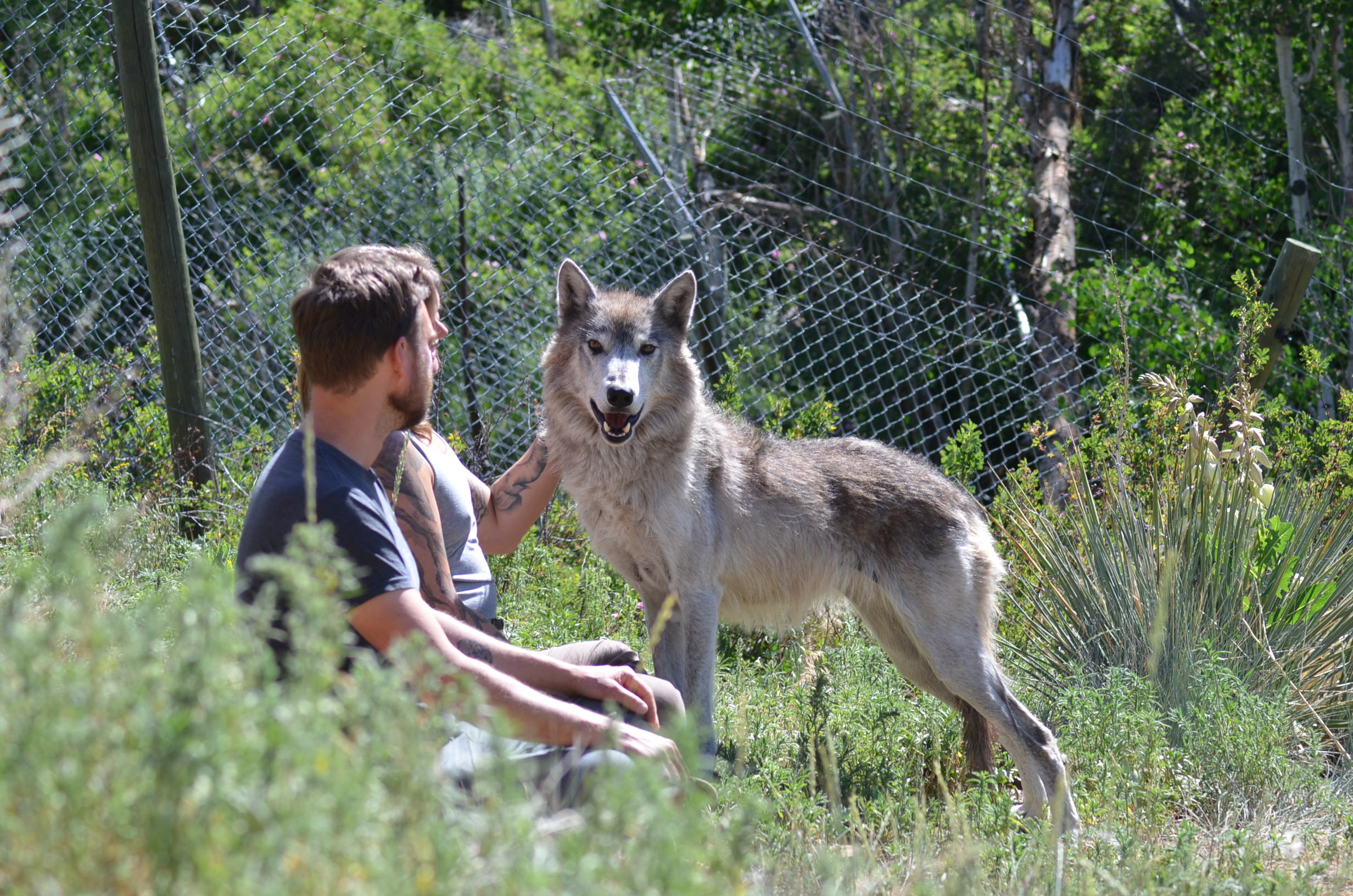
There is a wolf rescue in Westcliffe, Colorado– way back along several dirt roads and a few foothills. This rescue has one objective– if it’s good for the wolves, they do it. It’s been running since the year I was born, 1986, and the founders are calm, generous spirits who you can sense possess the half wild that humans dream of when they are kids– the in tune nature we possess before formal clothing and social expectations wield their way over the freedom of bare feet and sun on our skin.

We’d played a show for a group of 90 or so in town the night before, a favorite on the folk circuit. So much so, that our fellow folky friends reminded us over lunch on our way down– “Don’t forget to see the wolves.” This was our third time to Westcliffe, and both times before we’d forgotten to see the wolves. We are always in a hurry, and are working on that habitual flaw. So we called our host Bob as we drove down to the show, as a reminder to ourselves and a commitment to upkeep, and told him, “We have to see the wolves.” He obliged.

We took a quick morning run with our very tame dog, stopping at a local coffeeshop where the barista was chatty and asked us what our day would bring. “The wolves,” we said.

“Are you going to let them lick your teeth?” he asked.

Without hesitation, I said “Yes. It’s all I can hope for.”

And it was.

When You Go To Meet the Wolves, there is no guarantee they will greet you. They are wild, or at least half wild, and it is in fact very weird for them to want to approach. But if you are a very careful and a very lucky human, it can happen. And when it does, you must:

  1. Walk in with your shoulders back, looking around. Women are typically better at this, as they have been conditioned to be multi-taskers, watching cubs & prey & predators at once, chronically aware of danger and potential danger. Men, on the other hand, have a tendency to stay narrowly focused, hunched, and singularly minded. This inability to be open does not warrant the respect of a wolf, and just as the man ignores his wider surroundings, so he will be ignored by the wolf as neither threat nor peer.

    When I enter a room now, I will keep my shoulders back and my senses awake. My presence may feel threatening to some, but to those that matter, I will appear as an ally.
  2. After entering the den, look for your spot to sit, and sit down like a Queen to her Throne. Face up, shoulders back, alert.

    I would add to this, deep breaths. I am in more danger by believing I don’t belong somewhere than to believe that I do.
  3. When the wolf approaches and makes eye contact, look back. This is contrary to what we have been taught of wild animals, and contrary to what we have come to believe about people who are different than us. Anyone who cannot hold eye contact with a wolf is neither friendly to their approach, nor worthy of their time. For people, the same.
  4. Do not be on your technology. Hunching over and staring at a phone creates a hunched back, a downward gaze, and is not the behavior of a guest. It is the behavior of a mountain lion. It is the behavior of a predator.

    The wolves do not care that you have a social media post you have to check in on, or that flights to Edinburgh have just gone down $53, or even about your Merlin app that helps you connect with nature. They care that you are present, and not there to attack them. And even if they know that you are not a mountain lion, it has not yet been resolved as to whether or not the device in our hands isn’t the predator to us. When you are with the wolf, be with the wolf. Though this advice might be important in anyone’s home. What are you doing here if not to be here?

    5. Remain calm. The wolves can sense your fear. They can also sense if you are too eager. Neither is worth their welcome. Come back when you can be a guest that is respectful, and not radiating an energy that will disrupt their intentional ecosystem.

    You are a guest here in this den. You are a guest here in this country. You are a guest here on this earth. We are only caretakers, immigrants, passers through. And we are only given the time we are given. Don’t be afraid. Don’t rush out ahead of yourself. You’re here. Be here.

When Kissed by a Wolf:

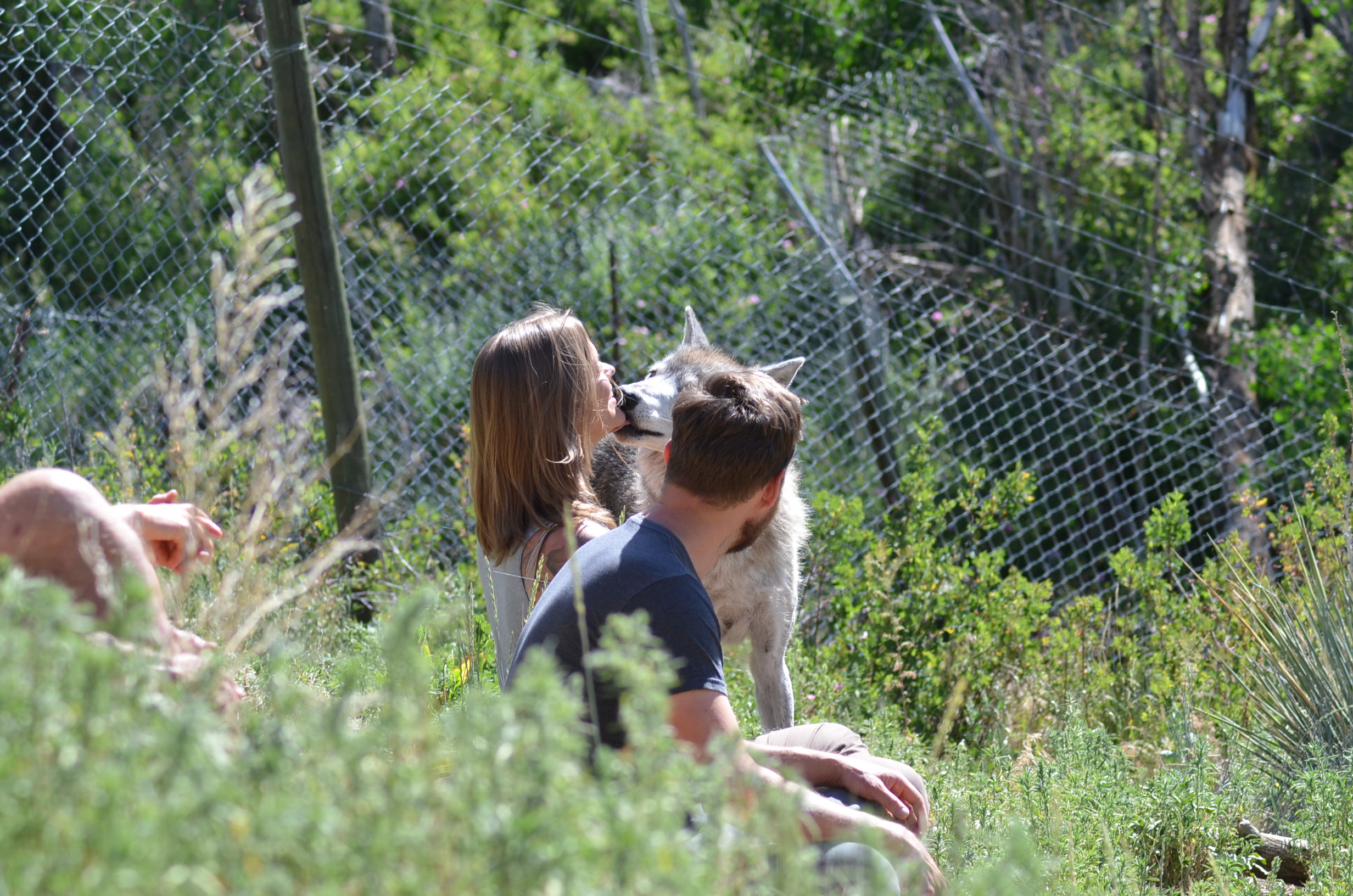
  1. Do not draw back. Remain as steady as you can. She will come to you fast, and you have been taught to be afraid. But from the moment you walked into her den, you have been training to be open and ready for her approach. It only takes minutes to untrain a lifetime.
  2. Grab behind her head and pull her in. Do not push her away. You’ve been fooled your entire life to believe that you don’t deserve this gift, the gift of close contact, the gift of a wild face upon your own face. But to push her away now would be to do to her what you have always done with everyone else, and the result is the same– she will think she is not wanted. She will be rejected. She will go away. And for all of your life you have never been so lucky as you are right now, this glorious fur and direct eye contact in your tame-for-too-long face– so for the love of all things sky and moon above, grab behind her head and draw her in. Drink the connection of stone to grass to wolf to woman and let her know that you are not only here and in control, but she is in good hands. Hands firmly here.
  3. She will want to lick your teeth. You are welcome to keep your mouth closed, but you’ve come this far, and even as you purse your lips, she will fleabite your lips until they open and then she will lick your teeth anyway. So it is better to have it. Let it be the full dental exam you haven’t had yet this year as you worry about your healthcare getting taken away– but wait, don’t worry about that right now. Because you are being kissed by a wolf in her own home and you have nothing in your head but this strange tongue in your mouth and the joy of being chosen. From here, she may let you pet her. She may arch her back and let you pal around and play and scritch those hard to reach places and circle you again and you will allow it because for the first time in your life, you are ready and truly open.

But Remember This:

Once a wolf has greeted you in this way, it is the equivalent to shaking hands in someone’s home. If you try again, it will seem strange to her. If you try a third time, she may be put off. Ten times in a row and you are a crazy wolf who needs to leave the den. Do not keep trying to shake hands with your host.

You simply have to accept that you are now accepted. This is the hardest lesson we may have to learn as people.

But sometimes, if you’re really really lucky like me, she might come back again. And again. And again. And you might be greeted like a long lost friend who has been reunited after years of being apart and no matter how many times we have kissed, it seems too good to be true and you will be kissed again. And in the acceptance and repetitive welcome of a wolf named Eden in Westcliffe, Colorado, you will come to accept a part of yourself you couldn’t before.

It will be an almost full moon that night. You will feel compelled to step out and see it, even though you are bone tired and feel less like you belong in the outer world of tall buildings and highways. And you will put your shoulders back and your chin up. Although it is a farce that wolves howl only at full moons, the truth is much better. That wolves howl at half full moons and no moons at all, too. They howl after feeding day, and when a change in the wind comes. They howl and howl and howl to mark the changes in the world and the changes in their lives and the cacophony would be maddening… if you weren’t now part wolf, howling back– open, open, open.

Mission: Wolf is located outside of Westcliffe, CO and currently houses 15 wolf dogs. Their ethos is simple– if it’s good for the wolf, they do it. If it’s not, they don’t. We owe them a great debt for the visit we had there, and the experience they offer all visitors and community members to bridge the gap in our brains between humans and nature through education, interaction, volunteerism, and space. If you would like to donate, visit, or learn more please head to https://missionwolf.org/

All photos by the staff at Mission: Wolf

One Tree Less

We lost a lot of trees while we were gone. Not small ones. The storms that blew through New England while we were down south, soaking up the sun on tour, wrecked our yard. We were fortunate– they didn’t land on the house, the shed, my studio. But it was no small destruction. A huge one went down, taking a few smaller ones with it. The trees that remain around the fallen are still bent at an angle from which I’m not sure they’ll ever recover.

I have not yet spent enough time in my home or on this land to be able to distinguish if they were at all useful or important to our two-and-a-quarter acre ecosystem. I couldn’t even tell you their specific classification. Mostly, we lost pines. We’ve been told that’s common here– pines don’t have tap roots. They’re real pushovers. Oaks, I am told, maples– the big deciduous types not only have a taproot, but are a flat replica of themselves below ground. They spread wide like the base of a wineglass, their roots luxurious in space, deepening further with their extended tap root finger marking their spot. Which is why they are more likely to survive the heavy winds of a New England storm.

The big tree that fell was this kind. A maple.

It created a small mountain of limb and trunk and branch, at which we numbly stared from our bedroom window. The immensity of this aftermath was trumped only by the loss of our lone and favorite Blue Spruce that went down next to the driveway– a household favorite– ball and all headlong upon our entry.

Trees have always been an obvious metaphor for me. As a kid, my parents called me a Treehugger, a gentle nag at my penchant for spending long mornings and afternoons in the woods around our cabin, coming back with a list of animals I’d seen, plants I’d identified, and rocks I thought pretty enough to bring home so that they lined the windowsills. I was the one who stayed indoors during deer season, gluing together pompoms and pipe cleaners and smearing them with paint rather than smearing my hands with the blood of the deer the rest of the family hunted– the deer that would feed us the rest of the winter. The venison I had no stomach for as I got closer to adulthood, as grateful as I was to their sacrifice.

“Our little Treehugger,” my dad would say as he came back in for lunch to find me melting wax onto a finished art project. It didn’t bother me, as I knew I didn’t actually hug trees… very often. It was a shorthand for some sort of understanding about who I am. A way of distinguishing some core belief I contained that was apparent to everyone, that didn’t seem to conflict with what I believed about myself enough to protest. And from there, I grew into a folk singer– treehugger adjacent, if not synonymous. In a sorting and forgiving of my childhood story’s hurt, I now have a maple tree– the maple from the backyard of my childhood home– tattooed up my arm and on to my right shoulder blade coming just short of my spine. A tree, at last, to hug me back.

And then I have my Circle of Trees.

Annie reentered my life in 2020, after a long hiatus of growing apart and moving on. We did long distance yoga and book club and grew to touch base almost every day. A happenstance of the pandemic, and of lowering our defenses. We had a third, too, but she fell away like a pine. Annie and I persisted, and came across a book that would help define us– The Dance of the Dissident Daughter by Sue Monk Kidd. It’s a book of faith, and a book of losing faith, and a book that took two women who invited a third– not long after a fourth– and grounded us firmly in each other’s path. The passage that has become our own shorthand is that of the Circle of Trees, wherein Kidd describes her women folk as a circle in the forest, in which each of them are a tree. They are rooted in each other’s soil, growing separately but sharing sun and shade and nutrients– sharing the earth beneath them as a way of communicating and connecting. It’s a metaphor that makes these hapless sensitive spirits feel stronger, less alone, and shielded from even the strongest New England storm.

The pine who blew down, she eventually grew back. Tentatively at first, then extraordinarily fast. For a minute, I mistook her for a maple. An oak. An ash or a birch or even a cottonwood. But a pine, however beloved, is still a pine. And at the end of last year, a wind took her out again from our circle. Not even a strong one. Just a low breeze on an ordinary day. And like that, she was laid out, rocks falling from the ball of her roots, though still casting those rocks in our direction.

“We are one tree less,” Annie has been saying since. The ache of it radiates from the truth, and I have still not fully healed from the loss. It is one thing to have a tree blown away. It is another for her to pick up her roots and leave. The unnaturalness of this departure crowds out my acceptance.

So when we came home last week to find our trees down, I was submissive to the metaphor again. I strained my eyes against the barrenness of the large tree’s absence, and covered my head with my blanket at 7:20 in the morning, when the sun peers in through a window that this tree used to block from glaring directly on my head. I begrudge her more. And then, I decided she was not a pine at all, not helpless and unsure and unable to resist. She really was a maple. Only a hardwood could do this much damage– and take so many down with her– when she uprooted and decided to fall. This was not the result of a light wind, but an accumulation of storms over time. One tree less, maybe, but a Circle of Trees affected. She’d been releasing her roots before someone else ever came to push her out.

There is a myth about hardwoods, that their root system below is actually a mirror image of themselves– that they go as deep as they do tall, each branch above replicated by one below. This is not true. In fact, it is near impossible for a tree to do so, to dig so deep, and still receive the nutrients it needs to survive. It must grow outward at the base. We are never exactly who we are above as we are deep within, no matter how hard we try. Always, we must spread our roots out toward others to steady ourselves. I am no exception. I can only hope my taproot is not formed of anger, but of something more sustainable. I can only hope I keep reaching out.

I have been finding small miracles beneath the wreckage. We have made friends with our neighbor, now– a handyman we were certain hated us, but turned out only not to know us at all. He came with machinery to clear out the large slabs that would’ve taken us a couple weeks to clear ourselves– slabs he’ll mill and use for his own work. He left us neat piles about the property– fodder for a bonfire we intend to invite our friends to this month before we leave again for our next tour. And also this: in late fall, we planted a northern tart cherry tree. It sits in the back yard, and was fully forgotten in the felled tree derelict. My Someone came in after the first assessment, looking hopeful.

“Everything is okay?” I asked.

“Well, no– we still lost a lot of trees, but guess what?” he paused for an answer, and on receiving none, continued, “I lifted up some of the limbs and found our cherry tree.”

I sagged, feeling myself drowned beneath a heap of limbs.

“No,” he said, reading me, “it’s okay! I think it’s going to be just fine! I straightened it up, and it looks to be in good shape.”

What luck. What damn dumb luck. Of all the pines, the big maple, the creature casualties– the littlest, not yet one year with us, held on for hopes of spring.

Sometimes the trees that have grown so big and strong around us, while destructive in their exit, aren’t as meaningful as the ones we are planting right now, the ones we are tending to. These little ones that may even one day bear fruit. Literal fruit. Sometimes, when those big maples fall, you’ll still notice the big gap like a toothy leer, but then you’ll suddenly remember what’s important, and with a quick assessment, can save what’s beneath it. And the sturdiness of a cherry tree in its first winter will shock you back into doing the good work of putting your hands to the soil– continuing to reach out. Of unexpected new neighbors. Of the reassurance of old friends.

Sometimes one less tree means a little more light for the rest of it. Some of it blinding in the morning, willing you to get up and see how it also shines directly down on a winter day to a strapping young cherry tree, waiting to be born.