Lindsey was walking around her house with an early morning coffee when she thought, “The things you own end up owning you.”
It’s a quote from Fight Club, we laughed later, but a plan was in motion. A few weeks later, she and her partner were on their way to Colorado to pick up their camper and find ways to downsize from their house. When she first shared her coffee epiphany, it startled me, too. Luckily the first rule about Fight Club quotes is you always share Fight Club quotes. And I’ve been bending my mind around it ever since, trying to let everything go.
Last year, Shai told me that she and her partner Ben were in the practice of eradicating the word “my” from their vocabulary. It is a practice of detaching ownership from their lives. So instead of calling Ben “my husband,” she called him, “Ben.” Instead of saying “my house,” she would say “the house we live in.” When she told me this, I found it intriguing but not at all practical. Which is to say, it stuck in my craw. In my world, everything was mine. My house, my birds, my garden, my trees, my community, my Someone, my oh my oh my. For the week following this insight, I stumbled over every “my” like a pothole.
The truth was that possession wasn’t just an infrastructure vocabulary, it was a form of affection. In calling the fox that lives across the street “my fox,” I am asserting that I have taken it as my own, that I am here to protect it and to love it as if it were under my jurisdiction and part of my family. Saying, “Have you seen my Indigo Bunting today?” during their short and rare visit this far north to my partner indicates that I am not only aware of that beautiful bird, but that I am actively seeking it. It’s cute. It’s sweet. It shows how far my love can go.
Then my dog died and nothing was mine anymore.
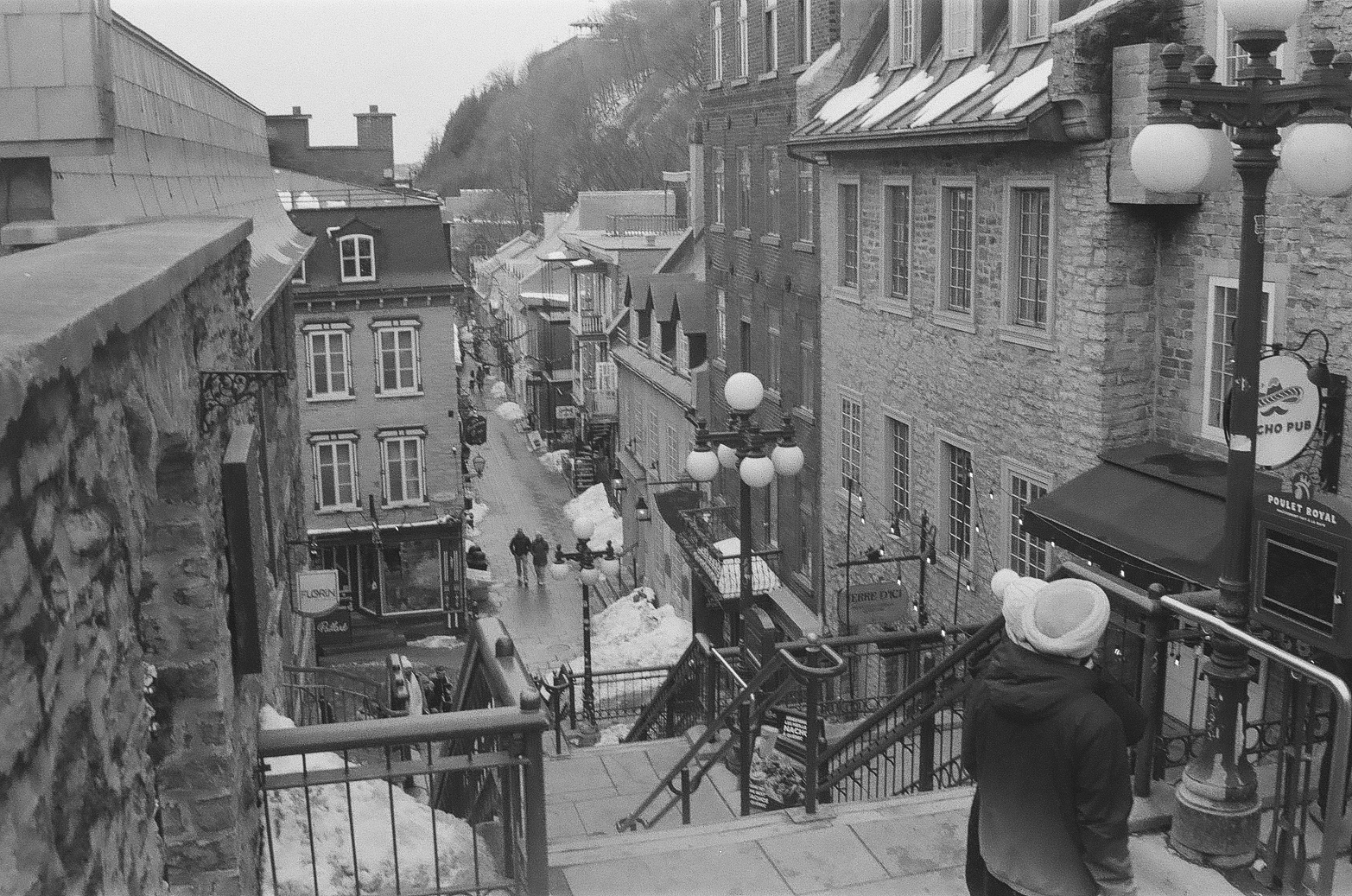
“When a house is over 100 years old, I mean, does anyone actually own it anymore?” Lindsey said as she talked through her deliberation of whether to keep or pass on her gorgeous old house up the road. She was right. We are only ever caretakers of the spaces we occupy. Even with heirs, we cannot guarantee ownership, and we certainly lose our ability to call it “mine” the second after our last breath.
After all, it is rarely the written document of ownership that gives us a sense of nostalgia, but rather the care we took of a place. This is why, years after its been sold, someone might drive by their childhood home, or their Granny’s old store, or the school they attended and have a deep sense of connection, and a curiosity of how it’s changed. The ownership of that place is gone, but the care is difficult to shake. This can lead to anger at seeing the ways it is not being cared for. This may also be a reason someone does not want to see a previous home at all– because there was no care taken, or them or the house itself, when they were inside of it.
From this, I’ve been trying to connect an architectural concept I learned from The Book of Tea by Okakura Kakuzo. In his soliloquy of Japanese tea tradition, he makes mention of a practice of simplicity of home, that the materials used are not the concrete foundations and rebar of the West, but of delicate woods and screens and nearly ephemeral materials. The concept is that the home is used until the person or couple has died, their children moved on, and then it is deconstructed– easily– to make space for a new construction entirely. I felt this to be a revelation, and is in fact an acknowledgement of the fleeting nature of life and all we think we possess. To create a light footprint on the world and then to leave with no trace– this feels selfless, holy. It also does not concede to sharing and the deep practice of letting go– of space, of ownership, of control.
I am trying, now, to do both. To acknowledge that everything is temporary– that my home does not need to have the finest and best and sturdiest, but only to suit my present needs in my short lifetime. And also, to care for it as if someone after me will use it, and reap the benefits of a loved space. To love something that is in my care, but is not mine.
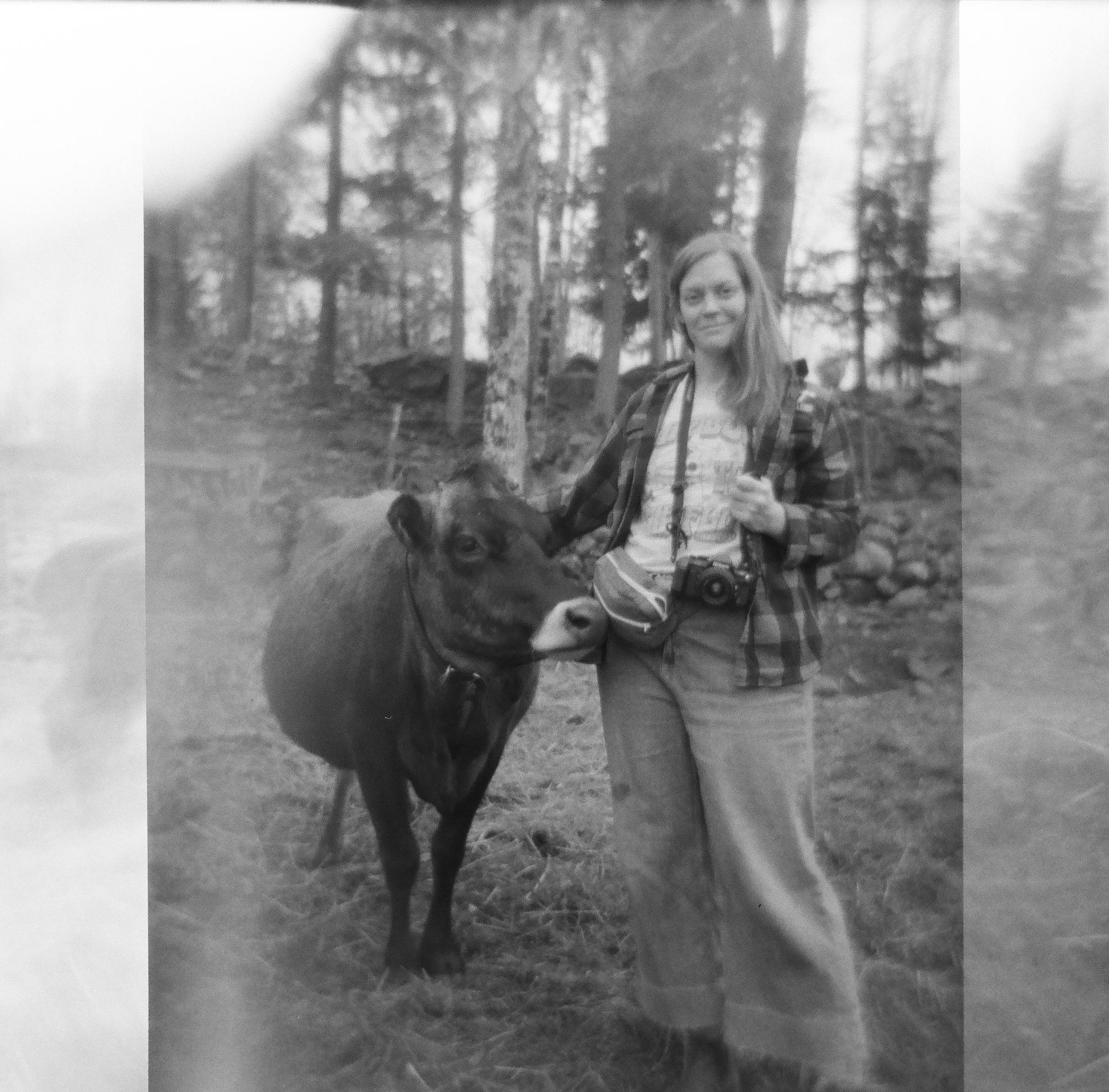
Of Puddle, the littlest dog in my family, we have an ongoing bit that we’ve had for years. When she is being extra cute– which is nearly always– I will exclaim to my Someone– “Oh, I wish she was my dog!” Then, we would both feign crestfallen, and recite together, “But she isn’t. She is her own dog.”
That’s always been the way of Puddle. She has been a loyal, easy going, social, endearing part of the family. She cuddles, she wants to be with us, she doesn’t wander far– ever. Yet, she always seemed to have her own way. On off-leash walks, she takes only Christopher Robbin sized adventures. She will perk up when called, but wait to determine if the call is urgent or necessary. We have had many people threaten to take her, as she is– in our humble opinion– the perfect dog.
And then, there was Magpie. Magpie, we would say, is definitely our dog. She needed to be someone’s dog, because so many would not take her. She came to us after a few blips in homes that either could not handle her, or did not care for her. For better or worse, she was our dog.
Until last week, when she became her own dog.
Magpie had a mass beneath her that was rapidly growing– cancer was at last diagnosed. She was still happy. She ran. She ate. Then she started losing weight, chewing her paws, crying in her sleep. It was time. We designated two days, and made them the happiest days Magpie could imagine. Running with her favorite puppy pal on the trail. Ice cream pup cups. Freshly cooked meat for dinner. Her favorite people stopping by. Being together outside in the garden, Patsy Cline on the radio. Pig ears and peanut butter kongs and getting to catch table scraps mid air in the kitchen (a forbidden activity).
In those two days, I felt something shift. Magpie had always been a difficult dog. Unruly. Loud. She was always knocking things over, overcompensating, and chronically being where she wasn’t supposed to be. She was the most good bad dog I’ve ever had. But in those two days, the tether shifted. She wasn’t my dog. She was her own dog. She was a dog who had favorite things and thoughts and an internal life completely independent of me. I was only there to care for her.
Dr. Will came over at 4PM on Wednesday. He was kind, connected. He nodded at Magpie’s condition and assured that– though she was barking and trying to put his whole hand in her mouth– we were unquestionably doing the right thing. Rowe & Laurie sat with us on the front porch on Magpie’s favorite sun spot as Dr. Will administered the first shot. He explained that she would feel no pain. He explained that though she became completely still, she was able to feel and hear us, and that she could remain in this state happily for as long as we needed. But as the four of us sat around her and petted her and told her what a good job she’d done– how amazing she was to have done the things she did in this life– I felt a pang of disloyalty. Because though she seemed happy enough, and was not bashing someone’s knees with her tail or accidentally knocking someone over, this was not who she always was. To keep her in a state of perfect calm was to keep her from doing the things she did that showed who she was. We had to release her from the limbo.
We waved over at Dr. Will, and he and his assistant administered the final shot. Her heartbeat slowed. Dr. Will said he thought she might have passed, but when he checked, she was still with us. Then, Puddle stood up from her spot behind us, walked between my Someone and I, and panted heavily looking down at Magpie. A few seconds later, she turned around, bypassed her bed where she’d been laying, and sat in the corner of the porch looking at us. Dr. Will checked again, and Magpie was gone. But Puddle already knew that.
Dr. Will left, and Rowe and Laurie helped us curl Magpie into a soothing position around her favorite Starfish toy. We carried each a corner of her bed and walked her to the enormous hole we’d spent a day digging. From there, we used the bedsheet beneath her that was our first merch table tablecloth to carry her down. We sprinkled lime over her body, then began to shovel. We made quick work of it, shoveling and raking and moving the giant rock to the center of the circle. We dug holes and put in compost, then hydrangeas and columbine and bugleweed. We spread mulch and at last watered. Magpie was her own dog, and she was also a garden.
I cried most of the next day. Not that I had lost my dog, but that she might forgive me for the ways that I did not acknowledge her as her own dog. When I looked at the garden, I could see her at last, apart from me, and I– not as her owner, but– as her caretaker.
Since Magpie has left, I take note of how often I say “my” again. I chronically self correct– not my roses, but the roses are blooming– and it’s been entirely cerebral. A thought experiment. Until yesterday.
Each year I take all of my houseplants– sorry, rather, all of the houseplants I take care of– out to the porch and give them a boost. I wipe down each of the leaves, add fertilizer, extra soil, and re-pot if necessary. There are a lot of plants in this house, and so the task takes me a good couple to a few hours to complete, depending on how much everyone has grown in the last few months. I’ve been spending a lot of a time on Magpie’s favorite sun spot, the place she departed. Without thinking about it, I set up the soil and clippers and water there, hauling each plant out one at a time to give it its literal moment in the sun. I was tying up the rubber tree plant, taking care not to nudge the plump leaves off the stem, when a shift at last happened. My mind created a small separation. This was not my rubber tree plant. It was living its own life, growing on its own. This was merely a plant who lived under a roof in a house I also inhabit. And somehow, in knowing this, my love did not diminish for it. My care did not wane. It increased. By removing it as an extension of myself and placing it as a separate entity, I in fact felt more connected to it. My empathy grew where my ownership receded. I felt, what I imagined, a doctor might feel during surgery– I do not know this person, but I care by my oath of empathy through healing that I will make their life better.
My vocabulary may not reflect it, but I am coming to terms with the heart of it. It will likely look different for everyone, but the concept is the same. While I’m not religious anymore, being raised on the stuff, it is often wandering through my processing. And now, I have the benefit of seeing it through a new lens. In writing this, that verse in the gospels where some guy yells at Jesus– “Hey, how do I become perfect?” drifted to the surface. Jesus responds, much like Buddha, that one should give all of their possessions to the poor. Obviously the guy scoffs and is disheartened because he’s so rich, he can’t imagine a world without those possessions. I always thought of this as a lesson in being too greedy– that it was a lesson in giving til it hurts. I was taught that it was a way to show how one must sacrifice and feel poor on earth in order to feel rich later in heaven.
But that’s not it, is it? Because there is never one-way liberation. The possessions that the poor receive from a rich person barely scratch the surface to the benefit of the freedom the rich person receives in shedding them. Maybe this looks like selling your house, sure. Maybe it looks like selling everything you own and becoming a monk. Maybe it looks like keeping what you own, but never placing too much weight of importance.
It is most definitely about letting other creatures exist, as they are, with compassion and loads of appreciation– and zero ownership. I’ve been thinking more about my other dog, Puddle. She’s getting a lot of extra attention without Magpie around. Why is it, with this creature, that I’ve never felt the need to own her? That she has always been her own dog? Mostly, very likely, control. Also, I have never questioned whether this dog has loved me back. We’ve been bonded since she interrupted my yoga practice on the first morning she lived with us.
The things we have will never love us back. So we insert our dominion over them instead. It’s nonsensical and leaves us feeling hyper vigilant and unsatisfied, because there is no replacement for love. So I guess Jesus and the old adage are true. If you really love something, let it be free. And in turn, be free yourself.