Author: mallorygaylegraham

folk musician, songwriter, blogger and an excellent cook.

It’s Magic.

I have been obliterated by magic.

I mentioned with frequency this year that I declared this a Year of Healing. The truth of that statement is that I saw an owl– the first bird of the year– on January 1st. My Someone and I had just departed a year of break downs, of death, of goodbyes. Any omen, even a notoriously dark one, presented itself as an opportunity for things to be different. We spotted its wide white face, its massive body, it’s looming presence on a low branch on the rail trail that connects from our home. It took our damn breath away.

“It’s the Year of the Owl,” I said, as if that were something we regularly declared.

“It’s the Year of the Owl,” my Someone repeated back to me. And so, it was so.

“That means magic,” I said.

“Hmm,” my Someone responded. And then he agreed. “Okay. Magic.”

Magic quickly turned to healing. I’ve read enough Harry Potter and fantasy and sci-fi to understand it. When one discovers magic, they uncover themselves. In order to arrive at the magic, they must first face the trauma that initially forced the magic out of them– familial drama, an ex-lover, a hidden memory from a fall into a portal. Translated, they must heal. Or else they become Voldemort. It’s very direct.

In order to heal, one must become vulnerable. This is tricky business, as it leaves you open to new experiences, to overwhelming feelings, and to the possibility that you’ll learn something you wish you hadn’t. This is the art of noticing– noticing my breath becoming shallower. Noticing how often I feel like crying. Noticing the sound of owls more often than I knew owls were around. It’s not all bad. There is also the noticing of the sunlight on my dog’s head, of the first fall leaf, or the way a stranger reaches for their friend and touches them lightly on the cheek before carrying on like it wasn’t the most important moment in history. These are the spells. They are mesmerizing and everything becomes important. Which causes its own sort of madness– the strange isolation of wondering if you are the only one that can see the rapid fire beauty unraveling every second we are on this gently spinning Earth.

I tried to explain this to people throughout the year. Some nodded enthusiastically. Some smiled in the you-adorable-pet kind of way. Most instinctively recalled a time, often in their teens or twenties, when they did something bold– traveled overseas, quit their job, took a road trip, wandered the Appalachian Trail, fell in love. They get a glimmer in their eye that is something like nostalgia, but more like a vase on the top shelf that they can almost reach. And then they settle back into the present moment with a bit of dust on their shoulders. The magic is suddenly possible. Until they wipe it away and put on clean clothes. Until they forget.

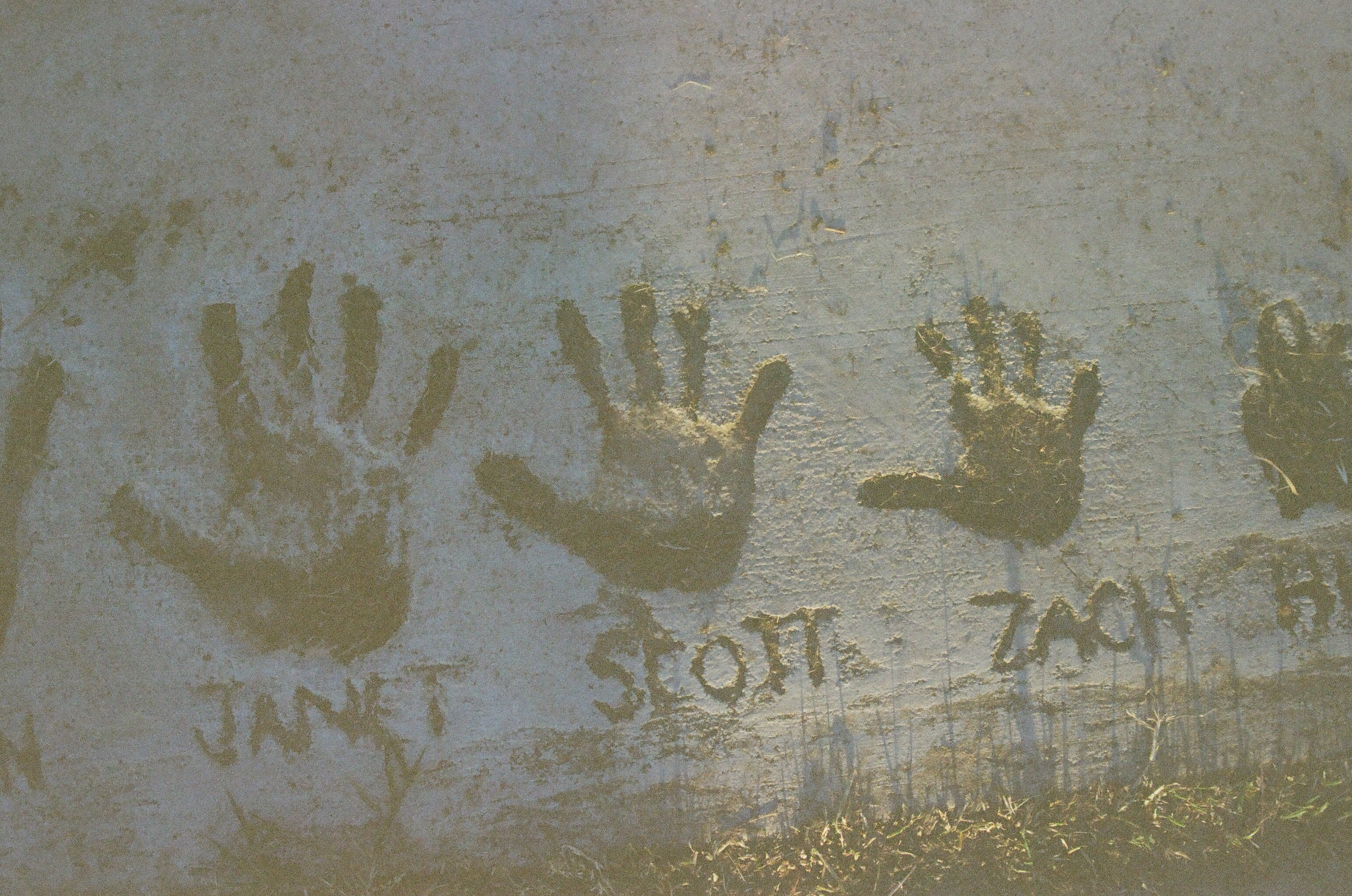
The place we go when we brush with magic is not time travel. It is not youth. The place we remember is the present. It is the memory of time not touching time– future and past– but time touching now, of dipping our hand in the pool of warm concrete under feet, of a sonic wave hitting our ear of a taxi cab honking its horn, of the green smell of the birch bark as we peeled it back from the tree.

We come across this magic naturally in our youth. We’re all unwieldy zaps of light and masses of shifting planes into other worlds. What I don’t think we realize– what I didn’t realize– is that the magic doesn’t go away. It doesn’t become harder to detect. It is in fact possible that it becomes more accessible. But now we are growing up, we have the tools necessary to hone it. We can experience and tap into the magic without accidentally zapping our roommate in the butt with it. We have the emotional ability to hold it in our hands and wonder.

I anticipated my pursuit of Magic this year to land me somewhere different by now. I expected to not have to work for it after 10 months. I expected that I would wake up in a whirlwind of presence and certainty, of crows landing on my shoulders and flowers blooming at my feet as I walked. Instead, I am mostly a blubbering mess when I listen to Rich tell a room full of friends at his 80th birthday party last weekend that, “I am so glad to have gotten to know you all of these years.” Instead, I am squee-ing at the sight of a mouse in my kitchen, delighted to have a new friend, trying to lure it into a cup with peanut butter so I can rehome it. Instead, I am awash with grief and happiness, often in the same moment. Instead, I woke up last night in a panic. I am prone to these– a frequent outburst of anxiety in the early morning hours wherein nothing I was worried about before is abruptly the most pressing and potentially lethal possibility. I took stock of my surroundings. I am home. I am safe. It is still dark. I am scared. I am scared. I am scared.

In response, the Owl hooted outside my window. I listened. She called a few more times, and then it was quiet.

The magic is not that there was an Owl. The magic is that I was able to quiet my fear enough to hear her.

The magic is in the watching.

So maybe it’s working.

A Grief Uncomplicated

“The thing about the death of a pet, is that the grief is so uncomplicated,” Erin told me, “Everyone in the situation can agree that it is sad, and it’s sad in this very pure way. It’s not messy.” This, of course, is in contrast to the very messy tangle of grief that occurs when a person is removed– whether by death or by fall out or by just losing touch. Erin’s observation sent me on a several week investigation.

In a self-proclaimed Year of Healing, grief is a hot topic; partially because of its inevitability, but also in large part for the mess it makes if left unattended. Pushing it down and aside left me unequivocally bereft by the end of last year– disinterested in creating, blase about making plans, jumping from sickness to sickness. And tired. So, so tired. I felt altered, like this was simply the act of growing up. You lose the people you love, and the grief piles up. We hold it til it winds its way around muscle and bone and calcifies, holding us in a statue of ourselves, a prisoner to our circumstances. We hold it until it sprouts bitterness or regret, circular stories that complicate the simple issue that we are sad because a person was there and now they are not there, so we can never tell them the things we wanted to tell them and they can never tell us what we’d hoped they would.

And it is for this reason that I have been trying to un-complicate grief. Which, as it turns out, was slightly complicated. Or at least delicate at first, walking the line of embracing a very real and natural process, and yet being willing to let go of it as it arises.

It started with a pizza.

I had a friend of 16 years who last year decided she would no longer be my friend. Her reasons were religious, and as much as I expressed my unwavering support and love for her, she would not abide. I was a dark mark on her celestial scorecard, and I was out. For the following months, I oscillated between smugness and anger and hurt, recalculating the timeline and digging into old postcards and letters which were our ever present connection, regardless of our disagreements. Until now.

When we passed through her town this year, I was exhausted with the loss. I was sick of the stories, of the absence, of the rationalizing. I was just sad. And I needed a way to eradicate the anger and complicated circles that had in fact calcified into my story with her.

So, I ordered her and her family a pizza.

It was a yearly tradition in the summer, where my Someone and I would park on their street for almost two weeks. In exchange for the spot and some showers, we’d help entertain the kids, wrangle the dogs, tidy up, take excursions to help my friend feel a smidge of sanity from the overwhelm of raising two kids, homeschooling, and hardly ever getting the chance to leave the house. And then, I’d cook. I made elaborate meals and sweet treats, tried tea blends and iced drinks, baked decadent veggie breads and took trips with the whole crew to farmer’s markets to try and find an ingredient or a vegetable with which to experiment. Before the kids’ bath time, everyone was full and relaxed, and my Someone and I would set to cleaning the kitchen while my friend and her husband put the kids to bed. Then, we would pick out a movie or just talk over a rhubarb crumble til well after 10, and start over again the next morning.

I loved being able to do this each year, as my friend became increasingly stressed out by housework and child rearing and trying to find some semblance of herself. It was the one thing I could do to ease what was clearly her own path to take: I could feed her.

In the spirit of uncomplicating, I called up the chain pizza place. I purchased gift certificates so as to “clean the dirty money” that could make any trace to my card. And then I sent two pizzas in keeping with her specific dietary restrictions to her home with a note.

Thought you could use a night off from cooking.

Nothing else. I couldn’t call her or text her, as she’d blocked my number and social media. I couldn’t stop by, as I didn’t want her to feel ambushed. I couldn’t sit across from her and tell her how much it all hurt, or even that I loved her. I couldn’t make her an elaborate meal. But I could send a damn pizza. And in this way, I hoped, she would feel the relief of a love consumed. And in this way, I uncomplicated over a year of agonizing the why’s and what-if’s.

“Don’t you want to know if she really ate it? Don’t you want to know if she figured it out?” my Someone asked.

“Nope,” I said, “It’s just a pizza from here on out.” And it was.

Then, it was a black eye.

We were one day away from home, on a hot day outside of Ann Arbor, Michigan. We had one show left to play on our four month tour, and we were heading straight through to home. For as quickly as time went, this day compensated in its painstakingly slow minutes, compounding with the blaring heat from a mid-July sun. We found a shady spot in a park and took a nap, then rallied the dogs for a slow walk. As the time for the show came, we ambled back toward the camper and drew out the dog bowls to give the girls some water. Maybe it was the heat or the post-nap haze, but as my Someone reached down to pour the water and I simultaneously reached down to untangle leashes, my Someone stood up– fast– and smacked the back of his head directly and hard into my left eye.

Here is what I have learned over a lifetime. Don’t cry. Don’t show weakness. Shake it off. Don’t make a scene. Don’t be overdramatic.

Each and every one of those lessons blared across the sudden flash of light from the impact. And just as I prepared to swallow down the now scorching blaze of pain, I reconsidered.

Here is what I have recently learned: you gotta let that shit go. As it turns out, the more one explains and rationalizes grief, the less likely one is to get to experience grief, the less able one is to move on from it.

And also this– I was too damn full of other hurt to add to the pile. No vacancy. It was time to un-complicate.

I hit the ground. I wailed. I expressed not only my immediate, shocking pain, but the long held ache of homesickness, of being too hot, of feeling the unfairness of an unexpected injury. I cried and I kept crying until I felt the last dregs of it empty. And then, my very apologetic Someone offered me an ice pack. And for once, I didn’t decline it to ascertain martyrdom, I didn’t demand penance. I took the damn ice pack and I asked for what I needed. I fumed for a moment, and then let the anger pass. By the time we made it to the venue, I had made a joke. By the time we hit the stage, I’d perfected the joke– much to my Someone’s feigned chagrin.

Not all grief works this way. Some must work its way much more slowly through the nervous system. As my eye continued to swell and soon blossomed blue and purple in the following days, I felt strangely proud. Here was an opportunity for my wounded child self to display justification for her self pity. But I couldn’t. The opportunity had been well cleaned out with a good old fashioned cry.

How simple.

And then, finally, it was this.

The phone call came too late to be good news. When I called my mother back, she told me there had been an accident. My childhood best friend, the one whose house and family we swapped back and forth endlessly to spend as much time as possible together, whose mother was pregnant with her in the choir loft alongside my mother when she was pregnant with me– her father was dead. I hadn’t spoken to them in years. All the same, I had to sit down. I was absolutely punched. Time touched eternity and flashes of our childhood played out– had I known? Had I touched the spot in the yard at age 5, age 10, age 16 where he would one day pass? To have been removed from that integral community in my adult life made the timeline seem so obvious, so unfathomably and inconsolably finite.

When I hung up, I took a few breaths. Don’t cry don’t cry don’t cry the familiar mantra was already relegating grief to a farther pasture– a pasture that would eventually be overgrown and unmanageable. No, I thought, do it now. My Someone and I were on Martha’s Vineyard with our friends John and Becky. We’d weaseled out a couple of days from our touring to take our very first vacation. You’ll ruin it, I countered myself.

Then the truth became visible. By saying nothing at all, I’d create a minefield of hurt for myself and for others to tiptoe around. By saying nothing at all, those vines of complicated grief will wrap around unrelated subjects and gestures and foods, sparking an erratic jolt to the heart. If I let it out now, right away, I’d have a fighting chance of uncovering grief before it turns to anger or resentment. I’d have a fighting chance of finding out what is on the other side.

I felt like a kid waking from a nightmare, looking for a grown up to tell. I emerged from the bedroom to meet my Someone and John, who’d been patiently waiting to walk into town for ice cream. I took a minute as I put on my shoes, and then told them, as I had been told, that there was an accident. We began to walk, the dark island sea air meeting us as we kept a slow pace.

I felt a little trivial at first, expressing my deep sadness for a man who I’ve not known for years. A man who I occasionally butted heads with. A man who I often fought with to get a later bedtime, to get his daughter an extra day with me, to let us please please please have five more minutes in the pool. And as I talked, the rest also came out– that I owe a lot of rides, of camping trips, of State Fair visits to him. That I also owe him a humongous Matchbox car collection, too. This was a man who, every Sunday morning, would come with a sack full of these tiny cars he’d collected, and every kid in church would get one. I had the whole wall of my closet lined with these toys, with specialty cases to display them as a birthday present from him. By the time we got to the ice cream shop, I had told all I could remember. It was a little less complicated. Not because I said nice things, but because I had said the hard things, too. Uncomplicating grief does not mean air brushing the bad– it means bringing it all into the light so that we may be lighter. When we took our ice cream and stood by the sea and watched the ferries come in and out as we ate, I didn’t feel less sad, but I felt the clarity of grief. And it didn’t feel trivial, anymore. It felt truthful.

Thank you, George, I whispered to the Atlantic Ocean. And then we turned back toward our house.

The night was difficult. I slept in fits and awoke crying, feeling the weight of a family with a now empty chair. In the morning, I texted my friend. She didn’t have my number stored, anymore. This would be a fact that I’d have felt ashamed of before. But instead of complicating a heartbreak, I understood, identified myself, and passed on my sympathies. Then I walked to town and bought a sympathy card. I didn’t deliberate it like I had in the past, wondering if I’d be welcome, wondering how it would be received. I was learning through pizza and black eyes that the first loving impulse is the most direct route to the heart. Sending a card wasn’t about doing the right thing. Sending a card was an invitation to grief itself to be let out into the open. Speaking grief out loud creates the door that one day, with time and intention, the bereaved may walk out of again.

It was our last day on the island, and we spent it visiting old haunts and new beaches. We stopped at a general store in West Tisbury and got out to explore. As I poked around bottles of maple syrup and lobster printed dishware, John called me over.

“Look,” he said, pointing at palm sized toy cars lined up on the wall. “I was thinking of your friend who passed.”

John is an excellent listener. And he has had an unfair amount of practice with grief. Every other week, John goes to Dartmouth to get chemotherapy for a cancer that he has been told will never be healed, but only maintained. This was just a few years after John suffered a stroke that nearly knocked him out of this life. And those aren’t his only near death experiences. Instead of huddling away and letting the grief crystallize into bitterness, John turned toward the grief. He talked about it. He tells the story of his struggle until it loses the power of anger, and then he follows it up with the story of his treatment, of his recovery, of his maintenance. John is not in denial. He is accepting. And this has put him in a perpetual state, as near as I can tell, of gratitude. He runs 5Ks, he takes trips, he taught himself how to drum again. He also makes jokes about his aphasia, is perpetually curious about nature and people, and is ever eager to meet up with his friends to play music, to help them in the garden, to eat Thai food. He has shared his grief, and his community has reciprocated to make his load a little lighter.

And in turn, he is a radiant alchemist himself, changing grief into love. And in this way, looking at this wall of model cars, I felt a happy memory of George bubble up, and a happy memory of John and I transfixed into our shared story.

I know the quotes of grief being the downside of love. I understand the premise of a love being stored, and when lost, there is an emptiness. Maybe what I am learning is that there are also two ways to see the emptiness. One is as a cavern, a darkness stretching into a darkness that cannot be navigated. Or, the absence is an openness, and when that openness is brought into the light, there is left a space for love to grow again.

Sounds simple enough.

A Room to Return to

“I’ve been estranged from my father for over a decade,” Susan told me last Friday night, “but it still hit me. Hard. I went to the funeral, and you know what? I’m the daughter. I get to write the ending.”

I felt like I was looking into my future. But instead of dread, I felt hope. Susan hasn’t been slouching on her responsibility to heal. She’s been writing, creating, living a life of kindness. And when the time came, while her father’s death came as a bigger hit than she expected, she was prepared. No shame. No looking back. Just the steady pace of one foot in front of the other that she’s been keeping intentionally, after years of being pushed under false loyalty and abuse. Susan is an emotional hero.

“You’ve got Oprah and therapy and books– there’s no reason to be mean,” she half laughed. She’s right. We have tools we’ve never dreamed of having. The trick, maybe, is to take the time to use them.

I guess, I had written, that this is as good a time as any to forgive my father.

That was June 2023. I’d been bumbling about with that phrase on the daily since. I’m not sure if I’m any closer, or had known precisely what I thought it would look at. But I am more at ease with the room within me that I keep my parents, their things, and the ideas and hurts and memories– good and bad– I associate with them. The specificity of forgiving my father has been since wrapped up in something I declared as “A Year of Healing.” I said it aloud to myself and my Someone and a few close friends, and it’s been holding for this calendar year, though I feel sure the start was in last year’s June journal entry.

I am now halfway through a year of self-inflicted healing. It is a nose dive to the direct parts of me that sting, after a year of being too busy to tend to the gapes and gashes that are still flaring. Emotional health, in this culture, is a luxury. It’s bougie. Until it is coming out sideways and one is considering quitting everything and hiding under the covers for the foreseeable future. There wasn’t really a game plan when I declared “A Year of Healing.” I didn’t have a graph to chart my progress. But the intention is such that I am guided by an impetus, a knowing, that I’ve always known and have recently stopped listening to. Healing was a matter of opening my ears again and letting what I knew to be true guide me.

Damn, this sounds woo-woo as shit.

But the truth is, in my slowed down intentional movements, I can almost hear the squiggle of sinew regrowing and attaching itself, the crackle of scab softening back to skin. I walk on the brink of tears, open and ready, and while that feeling was a waking nightmare to me last year as I was holding it together, this year the feeling is freeing. At any moment, I could sink myself deep into an emotion so rich that I will cry. The only thing different is that instead of fighting it, I welcome it. Like a portal to another world. Or rather, a portal to myself.

I began more intentionally acknowledging The Room within me this spring. My Someone had come down with some awful cold that knocked him out. I figured it was a matter of time before I caught it, but in the meantime, we took precautions wherein I slept in our upstairs loft as he sequestered himself in our room. I delivered meals and activities, and otherwise took over my own space with abandon. Colored pencils and pens and journals everywhere, where I journaled a minimum of two hours a day, trying to tidy up The Room.

I felt ashamed. This room, this place within me, has been all over my blogs, my songs, my conversations for years. I was sick of this room. I was sick of everyone knowing this room existed. And then, in a physical room of my own for a week, I recognized that it is just a room. Everyone has a room within them that is dedicated to their parents– whether their parents were there or not. We all have to contend with where we came from, and what their presence or lack thereof left in this room. We cannot expect that this room will suddenly disappear. It is a permanent fixture. The best that we can do is tidy it up, sort through the things, and with any amount of endurance and time, be able to leave the door open without feeling our insides rebel against us.

That was my goal this spring, I realized. I would return to The Room and tidy it enough that I could leave the door open without cringing. I could walk by The Room and acknowledge its place in my house, and continue about my day without it ruining my dinner. I pushed boxes around. I removed some knick knacks. I replaced some of the stacks of papers with a house plant. I opened a window and let the dust float around. Then I carefully wiped the surfaces down. I shook out the rugs. I investigated the room. In doing this, I no longer felt ashamed. I felt… peaceful. There was nothing in that room I didn’t know about, and if there was, I had the ability to remove it. Or leave it and feel the discomfort. For a month, I walked by The Room and continued the work of uncovering. And while there are still a few broken shards of god-knows-what beneath the table, and an unhealthy amount of dust on a few unpacked boxes, there is progress. I leave the door open. I really don’t mind it in there when the window is left open.

I am lucky, I realize. I have had years of contending this room before Pinteresting it. This room was behind a few walls I had to bust through– a secret room. The big demolition is over, sure. But the work never is. And there is no fear or shame in returning. If I have a conversation with my sister or my mother about our family and some unsavory memory gets placed in that room, I leave it for a bit. There’s enough space for it. But it is up to me how long it stays, or how useful it is. It’s not a matter of ignoring what is put in that room. It’s a matter of finding its place.

When I was growing up, a bear attacked our door up at our cabin in the woods in the Allegheny Mountains. What my parents could figure was that the bacon grease from our previous weekend’s breakfast had brought the bear to us. Judging by the destruction, it wasn’t going to easily give up, either. For the weeks following, when we would leave the premise, all food was locked up tight in the fridge, and a can of bacon grease was carried out and up the hill. We’d stop at the first big curve at the top of the driveway and walk back the can to the meadow where three huge rocks clumped together– the bear cave. We’d leave the can of grease there and depart. On our way back in the next Friday night, we’d stop and pick up the empty can to reuse. We never had a bear attack again.

I’m certain I’ve told this story before, tying it into some offering to the gods. But it’s been floating to mind lately as I consider The Room. While not everything that happened to me is my fault, and this is not an analogy of victim blaming, I do think of the proverbial bacon grease I have held onto in my Room. What has ended up in that room might not be all my fault, but what I choose to keep there is. The bait that allows those historical and emotional bears to break down my front door and make a mess of the place– that, I can choose to let go of, to walk it to the top of the hill. To let it feed some other source that is only destroying me.

Forgiveness, it turns out, does not need to be requited to be effective. At least not always. Forgiveness, sometimes, is a matter of kicking out the bacon grease so the bears don’t eat you alive from within.

And it is in this way that I am forgiving my father.

I do not envy my Someone. In recent years, he’s been conducting his own demolition to get to his Room. Recently, he found the door and opened it to find the place an absolute disaster. He can’t make heads or tails of what to keep and what to throw away. We discussed it safely in our truck as we drove right through the middle of the country, as far away from each of our childhood homes as we can get without nudging to one side or the other. I had told him about my room again after our show the previous weekend when a woman approached me afterwards and said, “Your songs about your parents, god I can just relate so much, and I’m old now but I just think– what the hell? Why am I not over this yet? Why am I back here again?”

For the record, Jane is not old. She’s only in her 70s. And in your 70s is as good a time as any to look at your Room and decide it might need a little more tidying.

“It’s just a room within you that you have to occasionally return to,” I tried. She nodded, thinking, before throwing up her hands.

“I guess that’s the truth.”

I gathered that Jane’s parents were no longer living, which seemed to agitate her more. The Room does not go away once your parents have passed on. This provided a bit of clarity to my Someone after he said,

“It’s just that my parents are always putting things in my room that I don’t want there!”

I told him about Jane. I explained that, maybe it’s true that someone else put something in his room, but maybe it is not. Maybe when handed these stories and memories and feelings that it is really him putting them in that room, letting them tower like a cartoon stack of newspapers bending eerily and threatening to fall. Maybe his parents are just doing the best they can, but because he has not yet organized his room, every offer feels like an intrusion to the ever looming stacks. Boundaries, after all, are not really for other people to remember and adhere to, they are for us to hold to protect ourselves. No one else can do it for us. After all, his parents are just the same dealing with their own Rooms.

The truth of this settled in when we talked about Jane. After all, the dead don’t speak. Unless we let them. The living don’t enter. Unless we invite them.

My Someone was quiet as he drove. I heard an occasional Hmm from him as we got on the interstate. He watched me for years tackle my own Room, not realizing he had one of his own. The best part is that he realized he also had a Room. The worst part is, mine is not the same Room as his– the same things aren’t in there, the same supplies are not needed to clean it. He doesn’t get to skip any steps because of what he’s seen me do. No one else can do it but him.

I am still singing songs about the early stages of finding and cleaning my Room. Now, when I sing them, it is less as a catharsis or as a charge to keep going and more as an historic account. Alongside these songs of pure familial agony are new songs of healing and acceptance. It’s a strange balance. As I have for the last few years, I get regular conversations from attendees who can relate and share, and those who can’t relate and want to give me a hug. It’s not a bad deal, all of this connection.

A fellow songwriting friend recently shared that she felt a sudden responsibility as she has been sharing new songs about grief. She relayed that one of her songs was shared by a listener to a friend of theirs who’d recently lost a child.

“I hope they’re okay,” she said, unsure if sharing a heartbroken song is good to share with someone so unfathomably heartbroken. I’d truthfully never considered it before. I’d always assumed that the truth, especially in the gentle form of a song, is the only contender for grief. Or perhaps it’s only solace. I come back to a core mantra from Glennon Doyle in her book Untamed who said “There is no one-way liberation.” Telling the truth not only liberates you, but liberates those around you.

But the important part, I believe, is that we not focus on what our songs and our Room are doing to others. We can only focus on what it is doing to ourselves. Because it belongs only to us. Our responsibility is not to let others into The Room to judge it, or for us to worry what others think of our Room. It is our job to investigate our own Room. And eventually, maybe, hopefully, that space will become wide open for others to feel the breeze through and to encourage them to investigate their own Rooms.

I hope my friend can go on singing these songs, unafraid. They’re really beautiful, and have liberated me, too.

Like Susan, I am the daughter. I get to write the ending. I used to have chronic dreams of my father’s funeral, and I’d wake up with the weight of wondering if I would attend. If I’d be welcome there. If I’d want to go. Susan did go. She didn’t just go, she wrote the eulogy. She found a way into her room, to navigate it, and she exited lighter.

Susan’s Room isn’t my Room.

But.

I think about the people who have approached me over the years in response to my songs about family. Some regret not fixing it before their parents died. Some hold out and were glad to have never attended the funeral. Some are relieved that they had their last words before death came. They may very well all be right– I’ve never been to any of their Rooms.

It is possible, however, that we put too much pressure on death, on this natural cycle. After all, death did nothing to change the state of Jane’s Room. Death may just be another sign– or in some cases the only sign– along the way to nudge one to their Room at all. For me, I thought I would procrastinate and let death find its way to my Room before I did– a deadline, so to speak. But then, I couldn’t. I don’t think I’d like to write the ending. I think I’d like to write the present, too.

It doesn’t look like anything has changed from the outside. My father still never calls me. But I am coming to accept his contributions in the background of the few phone calls between my mother and I.

It does look like new songs, new recipes, some fresh breath in the same old story. It looks like remembering kindly. This doesn’t mean brushing over the bad. In fact, the good is weighed a little heavier with acknowledgement of the bad.

At my family’s cabin, when I was a kid, I woke up early one morning before the other kids and wandered out to the screened in porch where my dad was sitting watching the lake. I went to say something, and he gently shushed me, waving me over to sit next to him on the porch swing. When I sat, he pointed to a tall tree where a blue heron was perched. “Look,” he whispered. And we sat there, silent, watching the giant bird. I felt my father tense and the bird leapt from the branch, gently and forcefully skimming the water and lifting to a tree farther down the shoreline, a large shimmering fish wriggling in its beak.

“Look at that,” my father said in his regular voice, breathing out.

If not for the silence between us that morning, I wouldn’t have that memory. It’s a good reminder that not all of my father’s silences have been bad. I’ve hung a tapestry of this memory in my Room, even as I sort out the boxes of strained silence beneath it.

And it is in this way that I am forgiving my father.

Anne Muree’s Grandmother

I have long held the belief that there are two kinds of people– Sky People and Tree People. I began this theory our first year of living on the road, as we crisscrossed the United States from Appalachia to desert to the northern woods to ocean. Which category you identify with isn’t necessarily indicative of where you were born, though it can. My Someone was born in desert with wide skies, but feels more comfortable under a canopy of trees. I was born in the thick woods of Western Pennsylvania, and too much time spent on the prairie or in the desert makes my dreams go wonky and my vigilance heighten to a dull scream in the back of my mind until I quiet it again with a blend of deciduous and evergreen.

I’ve tested this theory on lots of people through the years. My friend Sherry nearly lost her mind living in the woods of Tennessee. She felt nervous, depressed, unlike herself until she finally moved back West to a town barely over the Mexican border in Southern Arizona. When I visited her there, it was like meeting an enhanced version of the person I already loved.

Most times when I present this theory, people instantly attach themselves to one or the other, except the holdouts that claim they love mountains and ocean equally. Shave it down to where they’d live the rest of their lives, though, and they can usually answer automatically, no looking back. Sky people need to feel the space above them, see for miles. Tree people need the safety of an overhang, to feel sheltered. Both, I’ve presumed, are about safety. My mother-in-law, while she claims to have a heart for New England, is frankly creeped out by the trees. Her mind swirls with all sorts of headless horsemen and hidden monsters in the shadowy leaves. I believe her to be a Sky Person– one who can see the distant Sierra Nevada mountain range atop the low grape vines and orange trees, an unimpeded sunset each night. My own mother, while she likes the occasional visit to the ocean, inevitably feels overexposed in a desert setting, and much prefers the cool constant rustle of a thick forest for her daily walk.

I solidified this understanding of people over time and experimentation and interview. And when, after a decade, I finally submitted the theory to fact in my personal catalog, I met Anne Muree. We just finished playing a perfect show on a May Sunday where the weather was clear and warm enough to be outside but cool enough for one sweater, too early for mosquitoes, and the joy of a people welcoming in the spring surrounded by blooms and green was palpable. We played with our whole hearts, and were rewarded with an enthusiastic audience that took the time to talk afterward. The yard was nearly cleared out when Anne Muree approached me, clasping her two hands around mine and delighting audibly in the afternoon we shared. From the stage, I’d told the group that we’d spent our weekend in North Dakota, playing a grueling late night gig next to an axe throwing tournament. I cannot resist poking the bear of regional disputes. Around these parts, North Dakota is decidedly the butt of the joke. So I’d taken a couple of light hearted swings.

Anne was in good humor about the digs, and confessed she’d grown up in North Dakota. Fascinated, I asked her more questions– what’s the primary industry aside from oil? (surprisingly, the answer is sugar beets); when did she leave? (years ago); does she miss it? (no). But the last question came with some reservation, and she expounded–

“Everything I am, all the gratitude I live, I owe to growing up in North Dakota,” she said firmly, with a touch of sentiment. I laughed, thinking it was with irony and a dose of eye rolling. But she shook her head, “No, no– really. I owe it to North Dakota.”

North Dakota winters, she explained, are the fiercest in our country. The cold is so bitter, so grievously bone deep with wind that has nothing to stop it from finding every crack and crevice in your home. You cannot imagine a cold more desolate, more despairing than the way it rests on the flat, treeless landscape. But then, in the summer, the heat is pressing. No shade or mountain breezes, no break between the sun and the dry, cracked ground beneath you. The ground barely recovers before dawn each day, when the swelter begins with first light.

“You do not know the pain of the elements until you have lived in North Dakota,” Anne said. And then, she told me that the first time she moved down South and experienced air conditioning, she cried. Not the pretty welling up in the eyes, but outright wept. And she was so grateful in that moment to that stifling North Dakota heat for the opportunity to appreciate the relief of cold air amid the putrid pressing of the South Carolina heat. She told me this with no ounce of regret, no twinge of bitterness. Her appreciation was full, calibrated, honest. “I just love that place,” she said, “And let me tell you about the sky.”

The sky, she went on, was endless, vast, unfathomably wide. There was not a barrier to be found between herself and the endless up. And for this, North Dakota not only taught her gratitude, but taught her boundaries– that there were none.

“I would look up into that sky and I just knew, it taught me, that there was nothing– absolutely nothing— that was keeping me from being or doing whatever it is I wanted to be or do. There were no limits.”

This was my opening, my moment to impress her with my solidified theory of the kinds of people there were in this world, but when I opened my mouth, Anne Muree began to tell a story that has humbled me from my measly attempts of fitting people neatly into categories. It is a story that puts no harness on the wildness of the world, makes no attempts to make sense of inevitable brutality, and yet convinced me to see what Anne sees in those wide North Dakota skies. It is the story of Anne Muree’s grandmother.

The day after I met Anne, I awoke with a sudden pain in my left hand– a sharp pain that twinged down my pinky at usual tasks that caught me in a gasp and made me pull back. I chocked it up to sleeping funny, to long days in the car, to skipping out on my usual length of yoga in favor of falling into bed earlier. I got myself back on schedule, committing to the routine of longer stretching, less inflammatory food, and getting plenty of rest. It didn’t work. The pain got worse, until a week in, I was losing sensation in my hand as I played ukulele. I needed help.

I saw a couple of occupational therapists and a massage therapist, and diligently developed a new routine of physical therapy exercises to alleviate what I now understand to be compressed nerves. It was a slow injury of repetitive misuse of sitting in the car, and it will be an extremely slow recovery of twice daily exercises, improved posture, avoidance of those bad behaviors, massage, meditation and patience. As my mobility decreased from the injury, my panic increased. I played out the worst case scenario with no assist from the internet, and found myself battling as profusely with my mind as with my ever increasingly painful body. Chronic pain is confusing, as it has you running into the same unexpected wall again and again, wondering how you got there and unsure how to get around it. It’s maddening. My other Annie checked in regularly.

How’s the pain?

My response was not even with an attempt at positivity. I was getting worse. After two weeks, I finally fell apart.

I feel completely hopeless, I wrote back.

Oh man, I am so sorry! I hate that hopelessness. She is a mean ass house guest, Annie replied, referencing our favorite shared Rumi poem.

Hopelessness was just passing through, then, I remembered. This is temporary, but she is telling me that this is forever. This is who I am now. My career is done. She wanted me to feel bad for myself, and for everyone else to feel bad for me, too. So, I took a day to do just that. I let hopelessness have the living room, the bedroom, the whole damn house. I moped. I acted indifferently to the things I love. I despaired. And letting her reign was just what I needed, because the next morning I woke up thinking of Anne Muree’s grandmother, and Hopelessness was gone.

Anne Muree’s grandmother was a successful singer in Chicago when she up and got married and moved to the expanse of North Dakota. It was the early 1900s, when women didn’t fare well on the prairie. If it wasn’t the cold or the heat or the childbearing with lack of immediate medical resources, it was the insanity of isolation. The men went out to work all day in the fields– oil or beets– with the women at home with miles and hours between them and a decent grown-up conversation, packed in with snow or heat and the incessant needs of a whole brood of children chronically unmet.

Anne Muree’s grandmother did not despair. Or maybe she did. But she did not fight the despair of the wide unruly prairie– she welcomed it in. As the womenfolk suffocated from this environment around her, she went out to meet it. She was not to become a casualty of the landscape, but rather became part of it.

Shortly after her fifth child was born, Anne’s grandmother got a job as a postal worker. Behind her at home, she hired two local girls to stay and care for the children. Two so that they had one another’s company, I presume, providing both a couple of jobs and not perpetuating the cycle of women in isolation, paying for the needs of others with their bodies and their mental health. She used up nearly her whole paycheck to cover the expense, but it was worth it as she took to the long lonesome skies delivering mail across the state.

And she sang all along the way.

Out there, she satiated her itch for travel and nurtured her and her kinswoman need for company, chatting at each stop before making her way on the long miles between. And on those long miles, she used what she had– her voice. Lore has it that on the coldest days, when the air is so thin and shroudless, you could hear her singing coming over on the wind from ten miles away. Ten miles.

She died of old age, somewhere in her nineties.

It’s a helluva way to beat the odds. She could’ve run back to Chicago. With a ten mile voice, she could’ve made it in Chicago for sure. She could’ve written herself off as a Tree Person and settled her discontent somewhere that felt safer. But she didn’t. She opened her door to the brittle wind and met it. And for this, she became a prairie legend. The singing postman before John Prine knew his name, with a trail of hearts saved, stamped, sent and delivered into a small oasis of warm kindness in freezing tundra.

I am still in the midst of my recovery. Today, it does not feel like I will be better. I am tempted to imagine myself before the injury, or to project myself forward to when the pain is no longer there, when I can move and feel like myself again. But myself does not exist any more without the pain than I exist with it. I can fight the landscape I am in, defending my lack of presence by claiming that I am a pain-free Tree person, one who needs to be without pain and beneath my favorite maples to be fully productive. I could pack up and go home. Or I can look at this small, fierce land and I can accept it. And once I accept it, perhaps I will open the door, I will tie up my boots, and I will sing into it. There is no doubt I will feel the bitterness, but let it come. Maybe, with a little more openness, I will be able to look into the endless sky of it and know I am limitless, that bitterness makes sweetness better, that if I use what I have, on the most bleak of days, you can hear me singing ten miles away.

38.

I am 38 today and I am finally doing grown-up things. At least if you take those things out of context. Lately, I’ve been isolating my experiences and trying to explain them to my 10-year-old self, my 15-year-old-self, my 20-year-old self. I’d like to believe that my 30-year-old self could see her life coming, but I’m not sure she did, either.

It’s goes like this. I look at 20-year-old me and I say–

“In a little under 18 years, you will be attending a dinner party on the Upper West Side of Manhattan, catered, in a Pre- War apartment with a grand piano. There will be people from France, South Africa, Poland, and the United States there. You will be performing a song– not your own– but of a dear friend from England, a musician friend, whose birthday it is. You will wear a bright green dress that you found in a thrift store that makes you feel a little like April O’Neill from Teenage Mutant Ninja Turtles with all of its buckles and zippers, and you’ll be attending and performing with the love of your life.”

This description gives me a buzz in the back of my head. Details fine enough that it must be believed. But the rest, out of context, makes my 20-year-old self utterly baffled. What did my life become? Am I famous? Do I live in NYC? Am I rich? Conventionally, what I believed it would take to have this scenario play out would require circumstances, money, compromise that my younger self would not and could not fathom. So then I lay it on her, dramatically, with a wink–

“And you are and have always been completely yourself.”

She almost never believes me. She rolls her eyes and conjures some back alley deals or crossroads selling of soul in her imagination.

I try another. I turn to my 10 year old self and say–

“In 28 years, you will wake up on your 38th birthday in a tent-like dome with a fluffy king sized bed covered in beautiful linens that overlooks the hundreds-of-years-old Redwoods in the mountains of California. You will be drinking coffee– black– that you picked up the week before in Reno, Nevada that the love of your life prepared and delivered to you in bed, as he does almost every morning. You’ll be eating a cinnamon roll half the size of your head, and preparing to go see the ocean that day. You will have as many mixed and big feelings as you do right now, but you will have a way to work them into good. California is not your home, but you have a home, on the other side of the country. You only see it sometimes because most of your time is spent traveling. You have a perfect big dog who is always with you. You sing. For a living. Your write and you sing and you meet people and that weird 3rd grade career day report that you turned in where you said you wanted to be Shania Twain when you grew up and had to redo because it was impractical so you said you’d be a veterinarian instead– you were right the first time. Well, kind of.”

She believes me. But out of context, she has a few more questions. So I tell her–

“And you are still exactly who you are.”

At this, she does not believe me anymore.

I try once more. To my 5-year-old self I say–

“In 33 years, you will wake up at last and know you are loved.”

She looks so relieved.

“It’ll only take 33 years?” she asks.

“Yes,” I will say.

“What do I have to do?” she says.

“Be yourself,” I say. “It’s already there inside of you.”

She accepts this. She believes me. She’s always believed in me.

Pasta Bowls & Petroglyphs

We are back on the road because nothing lasts forever. Not our time at home. Not our dwindling bank account. Not our hibernation period. We left a week ago, the road before us our most ambitious yet– to get from Saratoga Springs, NY to Chico, CA in one week, in one piece, and be ready to start a four month tour upon landing. The days were a blur, but here I am, sitting in a public library in Chico, body and soul together, preparing to play a show in a couple of hours. Preparing for the inevitable feeling of the road, that every moment is fleeting, that nothing lasts, that being in the moment is the only moment or I’ll miss it.

Our first night on the cross country trek, we stopped for Mexican food and a sleep at our friend Ann’s house. Her Someone, Tom, passed last July. Tom, who was also someone to me, who leaves a cavernous space in his wake. It’s a space as big as he was– tall and able and equal parts intimidating and softy. No, I take that back. He was much more the latter. While I’ve been grieving his absence from my own home, stepping into his home– now only Ann’s– rippled my insides with a new strangeness. The grief, yes. But also, the inexplicable feeling of having forgotten to put something on my to do list. Every moment in the space gives me the chronic time loop of remembering he is not there. The feeling of missing something, then wondering what it is, then remembering he is gone, then pushing it from my mind, then feeling something missing… It’s a very small dose of what Ann must go through, daily confronted with his clothes, his coffee mugs, his car in the garage.

So, she is in the process of clearing out his things. This works differently for different people, as I understand it. Some rid themselves immediately of their loved one’s things. Others go years before– or never– parting with the pieces and remnants of a life left behind.

There isn’t a right way, but Ann is intent to land somewhere in the middle. She’s agreeing to be in grief, but also making pacts that she will not hold on to everything forever. Except when she opens her cabinets in the kitchen and wonders how she could possibly part with the pasta bowls. Because the pasta bowls, while they are relatively useless and one of them is decidedly cracked, are part of Tommy Tuesday– the day of the week in which Tom would cook dinner when Ann had to work late. Never one to do something halfway, he’d decided that for an evening of pasta, he and Ann must eat out of proper dishware. It isn’t just the memory of Tommy Tuesdays Ann would be throwing away. It’s the memory of Tom able to cook, able to move– just before Tom was too sick to do anything at all. Keeping the pasta bowls isn’t going to bring Tom back. But maybe throwing them away is to throw away what came before. Maybe throwing them away takes away everything but the brutal days that came after the pasta bowls.

Ann knows all of this. She has self awareness for days. She can conjugate her feelings with incredible accuracy, arriving at the proper “I should” solution to her grief. She knows that throwing out the bowls she’s never going to use isn’t going to throw away Tom or her memories or a life spent working on love. In very present time, she is doing the practical work for her mother, clearing out her father’s things as they move her mom in a downsizing effort. She grows frustrated with the old greeting cards, the receipts, the tchotchkes, the midway projects. It’s a clear path from a life shared to a clean slate she can see for her mother.

And yet.

The pasta bowls remain in Ann’s cupboard, too. Chipped. Empty. Metaphorical. Infuriatingly metaphorical.

I can see a clear path for Ann, too. Of course I can. It is not my house. Everyone else’s problems are always much simpler to solve than my own. My Someone attempts it, too.

“I know some people take a photo of the things that they want to remember and then get rid of them,” he tells Ann as we stare at the open cupboard.

“I know, I know,” she says. She’s already considered it. We all always already know the answer.

And yet.

I remember the strange things I took from my Aunt Tammy’s home a couple of years ago after her passing– a yellow silk scarf, a purse, a wooden yoga dog statue, sweaters, Moon Tarot cards, a kitchen bowl. I’ve since repurposed my grief, in small pieces, back out to local thrift stores. Nothing lasts forever. Not even the recollection of why I took these things to begin with. It’s a too-ready impulse to cling to what is left, to draw to us a smell or something tactile in hopes of rustling up a memory close enough to the person themselves that may just conjure them. And in this futile conjuring, it may even briefly alleviate the unending loop of losing them again and again as the minutes drag further from their departure of your timeline. A pasta bowl is a short respite from the aftermath of anger, despair, heartbreak, sadness– and simultaneously the reminder of these same emotions.

We preserve our people through their things, creating museums in our homes. Eventually, if we do not continue to live through these things back into our home again– if we do not repurpose them or lighten our load, the museum takes over, and we find ourselves moving around these items carefully. They become relics. The space becomes cavernous, cold, preciously preserved. Perfectly unlived at the exact moment our loved ones stopped living.

Ann is not there. This is a fresh wound. But she wants to ensure that she doesn’t get there, seeing a fork of a potential future in her mother’s home. She’s taking one room a month. She started with the laundry room. Then the hall closet. It’s almost the end of March. The kitchen cupboards open. Then close again. The pasta bowls remain.

To know we are not meant to carry it all, that we are not meant to keep anything forever, one must only look to the things we are trying desperately to save. I was at a birthday party last month on the Upper West Side in a prewar apartment when a couple, one half originally from France, began talking about the impressive petroglyphs found in some caves in the south of France.

“And you can really see them?” someone interjected.

“Well, they are facsimiles,” the woman replied, “The air everyone was breathing on the originals was ruining them.”

Everyone carried on, listening, then switched topics. I couldn’t get the idea out of my head. When we returned home the following evening, I stayed up in bed looking for the facsimile caves on my phone. Sure enough, I found that if one would go to these caves, you would not in fact enter into the original caves, but an exact replica kilometers above them. And they were, in fact, constructed not because of graffiti or theft, but because the CO2 from human breath was wearing away the ancient drawings. The cave was shut down some time in the early 90’s, and we’ve been accepting the facsimiles as the real thing ever since, in some kind of theatrical suspension of disbelief agreement for the sake of preservation. The reconstructed experience is near perfectly replicated in structure, light, temperature, and even humidity.

This means that our very breath, the thing that is keeping us alive, is the same thing that is killing our connection to our ancestors, our history, our tactile memories. By simply living, we are tearing down where we have been, eating the breadcrumbs of our existence.

So, we took a picture, and placed it on top.

For the love of everything, what is it for? If we cannot look at it anymore, if we seal it all away, who are we saving it for? Will the next generation build a cavern on top of the cavern on top of the ancient cavern to show the progress, to memorialize us? Will they care? Or will they put it all in a box with the pasta bowls and be done with it?

We cannot save anything, let alone everything. If we are to live our own lives fully, to the end, it is impossible.

And yet.

I believe I’d like to see those facsimiles someday. They sound a little like the incarnation of starting again.

And maybe it looks like this– that these memorials we host around us also exist within us. I have at least three pasta bowls of hurt stored within me. Last year, I declared that I would forgive my father. I do not know what that means, but the work seemed to start with saying it aloud. I open the cupboard, I look at the pasta bowl, I close the cupboard. I haven’t been ready. Sometimes I move it to a different shelf and move it back again. I try adding more pasta bowls. I try ignoring them. I try justifying their presence– I have a right to this story. I have a right to keep these memories: as fuel, as identity, as a link to what was true.

And yet.

Nothing can last forever. Even God’s anger, I’ve read, has a limit. Probably mine does, too.

If I keep my anger, if I choose not to forgive, I will have to work around these pasta bowls forever. I will have to build new shelves instead of clearing the space that I have. I may even have to close up a whole room within me and build a new one on top. It’s an incredible amount of emotional labor to memorialize pain, and seems only to create more heartache. I know, practically, that by releasing these pasta bowls that I will not change history, I will not change the truth of my story, I will not change my identity– and that forgiveness will provide its own fuel. I am beginning to see the clear path.

I am contorting less around them. I have maybe even placed them into a box. I’m feeling better, and it is not contingent on writing a letter to my father or demanding an apology. It has never done any good before– he has never returned with the answers I need, or answered at all. I could just as soon speak to his gravestone one day and reap the same response. Whether or not I keep my pasta bowls means nothing to the dead, or in this case the living dead.

It is solely my shelf space, my cavern. I think I may continue to breathe– deep breaths. I suspect that between breathing and living my life fully, intentionally, those old stories will fade from the walls. The walls within me will remain. I wonder what I’ll do with all of that luxurious space.

One Tree Less

We lost a lot of trees while we were gone. Not small ones. The storms that blew through New England while we were down south, soaking up the sun on tour, wrecked our yard. We were fortunate– they didn’t land on the house, the shed, my studio. But it was no small destruction. A huge one went down, taking a few smaller ones with it. The trees that remain around the fallen are still bent at an angle from which I’m not sure they’ll ever recover.

I have not yet spent enough time in my home or on this land to be able to distinguish if they were at all useful or important to our two-and-a-quarter acre ecosystem. I couldn’t even tell you their specific classification. Mostly, we lost pines. We’ve been told that’s common here– pines don’t have tap roots. They’re real pushovers. Oaks, I am told, maples– the big deciduous types not only have a taproot, but are a flat replica of themselves below ground. They spread wide like the base of a wineglass, their roots luxurious in space, deepening further with their extended tap root finger marking their spot. Which is why they are more likely to survive the heavy winds of a New England storm.

The big tree that fell was this kind. A maple.

It created a small mountain of limb and trunk and branch, at which we numbly stared from our bedroom window. The immensity of this aftermath was trumped only by the loss of our lone and favorite Blue Spruce that went down next to the driveway– a household favorite– ball and all headlong upon our entry.

Trees have always been an obvious metaphor for me. As a kid, my parents called me a Treehugger, a gentle nag at my penchant for spending long mornings and afternoons in the woods around our cabin, coming back with a list of animals I’d seen, plants I’d identified, and rocks I thought pretty enough to bring home so that they lined the windowsills. I was the one who stayed indoors during deer season, gluing together pompoms and pipe cleaners and smearing them with paint rather than smearing my hands with the blood of the deer the rest of the family hunted– the deer that would feed us the rest of the winter. The venison I had no stomach for as I got closer to adulthood, as grateful as I was to their sacrifice.

“Our little Treehugger,” my dad would say as he came back in for lunch to find me melting wax onto a finished art project. It didn’t bother me, as I knew I didn’t actually hug trees… very often. It was a shorthand for some sort of understanding about who I am. A way of distinguishing some core belief I contained that was apparent to everyone, that didn’t seem to conflict with what I believed about myself enough to protest. And from there, I grew into a folk singer– treehugger adjacent, if not synonymous. In a sorting and forgiving of my childhood story’s hurt, I now have a maple tree– the maple from the backyard of my childhood home– tattooed up my arm and on to my right shoulder blade coming just short of my spine. A tree, at last, to hug me back.

And then I have my Circle of Trees.

Annie reentered my life in 2020, after a long hiatus of growing apart and moving on. We did long distance yoga and book club and grew to touch base almost every day. A happenstance of the pandemic, and of lowering our defenses. We had a third, too, but she fell away like a pine. Annie and I persisted, and came across a book that would help define us– The Dance of the Dissident Daughter by Sue Monk Kidd. It’s a book of faith, and a book of losing faith, and a book that took two women who invited a third– not long after a fourth– and grounded us firmly in each other’s path. The passage that has become our own shorthand is that of the Circle of Trees, wherein Kidd describes her women folk as a circle in the forest, in which each of them are a tree. They are rooted in each other’s soil, growing separately but sharing sun and shade and nutrients– sharing the earth beneath them as a way of communicating and connecting. It’s a metaphor that makes these hapless sensitive spirits feel stronger, less alone, and shielded from even the strongest New England storm.

The pine who blew down, she eventually grew back. Tentatively at first, then extraordinarily fast. For a minute, I mistook her for a maple. An oak. An ash or a birch or even a cottonwood. But a pine, however beloved, is still a pine. And at the end of last year, a wind took her out again from our circle. Not even a strong one. Just a low breeze on an ordinary day. And like that, she was laid out, rocks falling from the ball of her roots, though still casting those rocks in our direction.

“We are one tree less,” Annie has been saying since. The ache of it radiates from the truth, and I have still not fully healed from the loss. It is one thing to have a tree blown away. It is another for her to pick up her roots and leave. The unnaturalness of this departure crowds out my acceptance.

So when we came home last week to find our trees down, I was submissive to the metaphor again. I strained my eyes against the barrenness of the large tree’s absence, and covered my head with my blanket at 7:20 in the morning, when the sun peers in through a window that this tree used to block from glaring directly on my head. I begrudge her more. And then, I decided she was not a pine at all, not helpless and unsure and unable to resist. She really was a maple. Only a hardwood could do this much damage– and take so many down with her– when she uprooted and decided to fall. This was not the result of a light wind, but an accumulation of storms over time. One tree less, maybe, but a Circle of Trees affected. She’d been releasing her roots before someone else ever came to push her out.

There is a myth about hardwoods, that their root system below is actually a mirror image of themselves– that they go as deep as they do tall, each branch above replicated by one below. This is not true. In fact, it is near impossible for a tree to do so, to dig so deep, and still receive the nutrients it needs to survive. It must grow outward at the base. We are never exactly who we are above as we are deep within, no matter how hard we try. Always, we must spread our roots out toward others to steady ourselves. I am no exception. I can only hope my taproot is not formed of anger, but of something more sustainable. I can only hope I keep reaching out.

I have been finding small miracles beneath the wreckage. We have made friends with our neighbor, now– a handyman we were certain hated us, but turned out only not to know us at all. He came with machinery to clear out the large slabs that would’ve taken us a couple weeks to clear ourselves– slabs he’ll mill and use for his own work. He left us neat piles about the property– fodder for a bonfire we intend to invite our friends to this month before we leave again for our next tour. And also this: in late fall, we planted a northern tart cherry tree. It sits in the back yard, and was fully forgotten in the felled tree derelict. My Someone came in after the first assessment, looking hopeful.

“Everything is okay?” I asked.

“Well, no– we still lost a lot of trees, but guess what?” he paused for an answer, and on receiving none, continued, “I lifted up some of the limbs and found our cherry tree.”

I sagged, feeling myself drowned beneath a heap of limbs.

“No,” he said, reading me, “it’s okay! I think it’s going to be just fine! I straightened it up, and it looks to be in good shape.”

What luck. What damn dumb luck. Of all the pines, the big maple, the creature casualties– the littlest, not yet one year with us, held on for hopes of spring.

Sometimes the trees that have grown so big and strong around us, while destructive in their exit, aren’t as meaningful as the ones we are planting right now, the ones we are tending to. These little ones that may even one day bear fruit. Literal fruit. Sometimes, when those big maples fall, you’ll still notice the big gap like a toothy leer, but then you’ll suddenly remember what’s important, and with a quick assessment, can save what’s beneath it. And the sturdiness of a cherry tree in its first winter will shock you back into doing the good work of putting your hands to the soil– continuing to reach out. Of unexpected new neighbors. Of the reassurance of old friends.

Sometimes one less tree means a little more light for the rest of it. Some of it blinding in the morning, willing you to get up and see how it also shines directly down on a winter day to a strapping young cherry tree, waiting to be born.

Baptism by Fire

I love New Year’s Day like I love the feel of a house thoroughly cleaned. I’m willingly deceived into treating the day as laundered time. I suspend my disbelief at midnight New Year’s Eve and hold it til midnight the first.

Like most things, I blame my Christian upbringing. A Regenerational Baptism believer, at that– wherein there is magic in the water of baptism: it is mystically unified with time, space, and a little of the hard stuff (a god’s blood) to create salvation. They won’t call it magic, though– too Hollywood. Colloquially, it was once described to me in a Western PA preacher’s office, where I was once again relegated after asking too many questions in Sunday school, that if Christ’s blood was the cement, the baptism was the water, and together they made concrete salvation. That is a solid metaphor, void of magic.

That is, of course, unless you really messed up. The details aren’t totally clear, but at some point, there is a knowing that your salvation sort of slipped out the back, likely due to personal lack of diligence. Sometimes others can pick up on it before you do, and will likely take precious time to let you know you’re in dangerous territory of wringing out the magic waters from your soul and drying out in Hell. Once that happens, the process has to start all over again. My sister, the one who hasn’t spoken a kind word to me in a couple of decades, had to be baptized twice. Once in our swimming pool with a gaggle of other girls, and another time on a mission trip in Mexico. This makes sense to me. If anyone needs a couple of takes, it’d be this lady. Though I’m still wondering if there was some sort of chemical imbalance or parasite in her particular baptismals.

After my sister got her booster baptism, I became obsessed with the idea. Especially after my own baptism proved a little underwhelming. While it is, in addition to magic, also an outward sign of an inward agreement with God, I thought that it’d be… more. I thought I’d be more. I had impostor’s syndrome, and a distinct fear that everyone could see my tiny 12 year old breasts as I came up from the water in my wet white robe. Once I changed into more modest attire and retreated to the church basement, watching my parents be congratulated and all of the dyed perms mill around doling out cake (in hindsight there was cake– it was my spiritual birthday, after all), I couldn’t shake the feeling that I wanted to try again. Maybe it wasn’t complete. Maybe there was a little spot behind my ears that was missed, and now I was destined to be only partially baptized in a full-immersion-only society. Again, again, again, I rotated through my skull. Every screw up, every impure thought (mind that I was twelve and that was just the beginning of those endless failures), every misstep had me running back to the anticlimactic day of my baptism. Maybe it was time for a refresh. A second dose. I needed another hit of purity.

When I broached the subject with my parents a couple of years later, they brushed me off. I asserted myself, pointing to my sister’s redo as evidence of our genetic disposition to faulty first baptisms. That in the time it took me to get one, she already got two, and doesn’t she always get everything? I was met only with their assurances, a kindness I couldn’t recognize at the time. I spent years emotionally self flagellating to compensate for my inability to receive the quick magic cleanliness my baptism clearly hadn’t delivered. I looked elsewhere, tampered with off limits theologies, and eventually left the faith. Or, left any remnant of it that is certified with a collar or a board of elders.

The impulse to start over still remains.

Christianity isn’t the only religion that offers a clean slate buy-in. This service, while a little morally pricey, is in supply because there is demand. Humans want this– the chance to start over. We get a new job, we move to a different town, we go on vacation, we even procreate extra humans for a chance to start new now. This time around. We’ll be better than we were, better than our parents ever could be. Eat, pray, love. Diet, repent, withhold. There are a thousand different ways to enact what we crave. Baptism is just a direct shot.

And so is New Year’s Day.

What is built into these rituals, falsely, is that we can step outside of our old skin and into a new body and spirit of good intentions and bright future. That this arbitrary day or pool of water or new town will fortify our will to that of a glowing orb spirit that isn’t messy with jealousy or skin or a full bladder. We will mind over matter the shit out of ourselves this time. And if we mess up– well, first is the self hatred. Then comes a new year. Or if your parents let you, a second baptism. But you gotta be damn lucky for the latter.

I’ve recently tried to stymie up the impulse. In my untangling of the more emotionally and mentally problematic parts of my religious upbringing, I veered the way of self sabotage, spending New Year’s Eves drinking too much of whatever was being served up, and spending the first day of the year grieving and repenting with a bowl of black eyed peas and greens and Ibuprofen. I would drink less. I would exercise more. I would be smarter, somehow, and iron my will until I was unstoppable and simultaneously the most lovable person anyone has ever encountered. Plus a three page list of goals for the year: how I would eat, what I would make, the money I would save, the dreams I would definitely accomplish, and how I would probably memorize all of the countries and be able to locate them on a map. Just for starters. The pull and push of mess-up-big then double-down-on-plans-to-be-better wasn’t all that different than the sin-and-repent cycle I knew all of my life.

My path isn’t for everyone. Sometimes I wonder if it’s even for me. But my need to start new, to be a better version of myself, it had me caught in an endless cycle of feeling my failures. Failure, it turns out, is not a great motivator. Especially when I was the one defining what constituted failure. If left up to me, I’m always failing. I’m never enough. I can’t even get my sins washed away right. In the last couple of years, I quit drinking. I exercise regularly. I write more. I take breathing more seriously. I take time less seriously. This isn’t a list of accomplishments, or a how-to. It has been a natural progression of getting to the bottom of the chronic problem of restarting. It’s not that I am messing up less; it’s that I stop categorizing time in terms of good or bad. It’s a long shot, but I’m trying. The extra walks help. So does the Tao.

But New Year’s Day is still irresistible to me. And why not? Fresh starts aren’t inherently bad. Using fresh starts to justify my mistakes or to set myself up for more self hatred– that is a problem. I’m trying to cultivate a healthier hangover. Instead of fogging over the source of my restart impulse, it’s more like a light of clarity searing over the truth of time as it is, not time as I wish it to be. The year behind me fresh in mind with mistakes, the year in front fresh with possibility. January 1st is a lovely cliff of intention I can feign to look over for miles forward and backward.

And so this year, for the second year, I invited my friends over for The Burning of Regrets. It’s a mid afternoon gathering, to account for the nonjudgmental potential of real hangovers and lack of sleep. And it gives me the morning to brood and wander through the suspension of time while I tidy my home and add more salt to the black-eyed peas. The smell of brown rice fills the kitchen, mixing with the cinnamon and vanilla sweet of the Golden Milk I began simmering before noon. Expectations for the 1st are much lower than the Eve before, so my perfectionist host self takes a nap while I take a few minutes to sit and write a little speech. It feels silly, but necessary, on account of the resistance that will inevitably arise.

Our friends arrive in the stagger that suits them best, some with cheeks still red from their New Year’s Day hikes, others a little sleepy eyed from a late night or a long end of year. We fill our bowls with Hoppin’ Johns and our glasses with bubbly or fake beers or sparkling water to our taste. The room breaks into two while spoons scrape, half breaking into bursts of conversation and the other half working fastidiously on a local puzzle my Someone and I left on the table, hardly started in hopes for a little help. When the time feels right, I pick up some scraps of paper and pens and begin to pass them out. This is where it begins.

“I’ve never done this before…”

“I don’t believe in regrets…”

“What if I don’t know what to write?”

“Will anyone read this?”

The questions come in overlapping waves, and I do my best to assure, talking my way around what I mean, this thing I am still working out for myself. The point, I try and explain, is not to dwell on what we’ve done wrong, but to acknowledge what we don’t want to keep carrying with us. Because really, I don’t think I believe in regrets, either. Or maybe we’ve villainized the word regret too much– that to have regret is to have not lived our best, to have not learned, to be living too much in the past, to have a barrier between ourselves and… ourselves. But regret is also the only word that comes to mind. And by burning it– well, it’s a real statement piece. We send it away. So, I tell my friends that, no– no one else will read it. Yes, we all have something to write. No, you don’t have to believe in regrets to think of something. Yes, it’s okay to be new at this.

With that, we were off. The room got a little quiet, the air a little strange. Then we filed to the kitchen, pulling on jackets and boots and walking out to our cold, snowless yard where my Someone worried himself over wet firewood. We stood in a circle, meditative, trying to take the event serious, but maybe not too serious. That is to say, we were ourselves as we could be teetering between before and after.

“We need to hurry,” my Someone pressed, “this fire isn’t going to stay long.”

I pulled out my pieces of paper, wrinkled in my back pocket, and read what I’d written that morning:

In a new year, we are working– not to become new, better versions of ourselves, but to uncover who we already are. We acknowledge our regrets as a sign that we are learning, that we are consciously taking part in our own lives, that we are aware of our shortcomings. In letting go of these regrets, we are making space within ourselves, but also between ourselves and the people around us so that we may, a little every year, with every small decision, unblock our hearts. We acknowledge, we learn, we let go so that we can know ourselves better, and love ourselves and the people who surround us better.

Into the fire go our regrets, burning up everything until only love is left.

And then, one by one, we burned pieces of paper that for the last few minutes, we had held closely to our bodies, nervously keeping them folded away from anyone else’s eyes. The fire flicked and flipped some, getting gasps from a few, and then sighs of relief as the regrets quickly turned to ash before they could be read. We laughed at our own shyness, at our own secrets, at our own shortcomings. Of course, we have nothing to hide. Of course, we all have something to hide.

Maybe it goes like this: that the baptism, the redemption, the starting new– while it acknowledges how human we are, it insinuates that we will try much harder in the future to be less human. That we will be flawless. That we will be better. That we will be like God. The variation on the theme, and perhaps the love I hold for this new tradition, is that I am not only saying that I am human, but I am also showing myself that being human isn’t a character flaw. It isn’t something I am trying to work out of my system. It isn’t something I need a break or a restart from. It is wonderfully chaotic, oppressively sustaining, joyfully morbid. And, in fact, in carrying this regret into my first and only day of the year to be perfect and new, I am rededicating my commitment to be even more human.

Thomas had prepared a song written for the day. It was heartbreaking and funny and full of the mishaps of 2023. Then we walked quickly back inside. I ladled up hot cups of Golden Milk for everyone while my Someone topped them with shots of espresso for anyone who asked. The kitchen got even smaller as we sipped the fatty, spicy coconut drink, making jokes as we spilled the turmeric liquid or bumped into one another– “There’s my regret for next year!” Yes, yes, yes. Let’s keep building up more regrets. Let’s keep being chancy by running into each other because we are so large and our spaces are so small and we have no choice but to touch each other with the immensity of our humanness.

When the bottom of everyone’s mug showed, hats and scarves were redistributed, and arms flung around necks. Sweeps of cold flew through the door with goodbyes. Two friends remained to finish the puzzle. Then, it was just my Someone and I again. The house was bigger again. I looked for it then– the again again again that rattles in my skull when I have not fulfilled my penitence; when the holy water did not cover every hair on my head.

Regretfully, it declined.

My Someone and I heated up a frozen pizza and sat on the couch to watch a sitcom.

“What was your regret?” I asked him.

“Wet firewood,” he declared.

“Wasn’t that your regret last year, too?”

“It was,” he said. “It was,” he repeated.

But What Did God Say When He Told You Not to Be My Friend Anymore?

What I’ve been wondering is, when God told you to stop being my friend, was it in the still small voice or the fun Old Testament theatrics?

Was it in the gentle breeze, like the ones we hoped for on your back patio in the stifling late July Michigan summers, where your wild mint and our laughter, both, could not be tamed? Or was it on a gale of wind like the ones that blew out the power lines that one night? Tornado sirens wailing, the sky yellow, and you and I leading our entire families– dogs and all– across the street to your neighbor’s house, where we let ourselves in the basement door and piled on the floor. Your daughter was just a baby then. We sang hymns to make us less afraid.

We were always singing hymns, because you need them and I love them and I always loved to find the things that made us the same. I can see, now, the discomfort it gave you– that while I always sang them from the heart, I did not sing them for my salvation. Which put me in the Gray. Where everything else could be Black and White to you, my love for you and my love of hymns and my love even of god was unsettlingly in a non-category, fuzzed out Gray like an option you can’t click on your computer screen. Was that what made God tell you that you couldn’t be my friend? That made him come down from the throne on the most high to tap your shoulder and let you know that there was no one else that could be sent, that he had to do this himself, that you must be told by him directly and with no uncertainty that I needed to be cast out? It would make sense. I am unmanageable in the ways of Yes or No and Black or White and Anything or Anything. I am faithful but unruly. Loyal but ungroomed. Lovable but feral. Yours but not yours.

So tell me, please– how did he say it?

Were you sitting quietly in the back of a bus when he walked on, plopping into the seat beside you, catty and gossipy and eyes rolling and laughing and saying “When she gets on the bus, let’s not make room for her! Let’s make her sit up there with all of the sinners and the gays and the Catholics!”

It had more tact than that, I hope. You have more tact than that, I can’t imagine you’d let him get away with it.

Was it like Samuel being beckoned by the actual voice of God? Did you feel confused at first, thinking it was your son calling you in the middle of the night? Did you go to check on him and find him still asleep, and then go out to the night sky– the wide starry kind we first met under on an island in New England over sixteen years ago? And did you say “Yes Lord.” And he told you, right there, in the dark with his own voice?

Or maybe it was less conventional. Maybe it was a modern miracle of my face on the body of the Virgin Mary charred with precision on your bread as it popped up from the toaster in your kitchen. The same kitchen we spent our nights talking about our periods and our music and our strange, rattled history of remaining friends in the most unlikely circumstances. The same kitchen you told me that my parents treated me like an enemy. The same kitchen I told you that your husband treated you as a slave. The same kitchen we both said, “I know, I know, I know” and we cried and conceded that the other was right. And when I returned to my mother, and you stayed with the man who keeps you, neither one of us turned the other out in judgment. Instead, we put on the kettle for tea. These moments, these forgivenesses lost for the Lord speaking on a burnt piece of toast.

Maybe it was the writing on the wall, like in the book of Daniel, a hand simply appeared on your bedroom wall, and like he wrote to King Belshazzar that his kingdom was soon over, so he wrote you that our friendship was done. Right there, on the same bedroom walls I painted for you those few summers ago, right after your youngest was born and you were in the deepest dark of your postpartum and those damn dark blue walls that once held you in a cocoon now suffocated you. So we went to the hardware store and I helped you pick a color and for a day and half my Someone and I changed that dark, horrible room into a bright sea green so that you could breathe again as you breastfed in your room, even as you worried over every breath of your tiniest one. Not once, but twice did you feel they weren’t yet bright enough, you still felt the darkness leaking through, and I didn’t care that it was already covered; I only cared that you were so so sad and I would paint for five more days and go through ten more gallons until we left if it meant that this paint would help you not feel so so sad anymore.

Or maybe it was like Jesus himself– a real pro move– in the Garden, praying for this cup to be taken from him, that this burden might be given to someone else. Right there, in the St. Francis garden at the convent next door to your house, the same garden I took all those walks with you since you moved there more than a decade ago, as your oldest boy grew up and grew rambunctious and we’d let him run while we trailed behind with my dogs leashed. In the same garden I took your family photos that year, where you all glowed like an angelic, perfect family. Maybe it was there, and you were taking your daily walk, the one time of day you have to yourself without tiny fingers crawling on your body and little voices screaming into your ears, and you dug your knees into the earth and begged that the Lord let us remain friends. And just like in the Jesus of Nazareth movie, a light shone down and you knew we were done for.

Which I guess reminds me– did you bargain to keep me? In any of these scenarios, did you beg for a ram to miraculously appear instead? Or even just ask for another friend– a friend that didn’t share so much history, so much care, so much love for you to be taken instead? Because God will do that, you know. Even the crazy Old Testament one. I think if you ask, he’ll notice you’ve been devout enough to let you slay a lamb chop for dinner instead of me.

Maybe I know that every word I write is another piece of shrapnel that surely will tear through the imaginary thread of a chance we have to go back, to ignore your direct orders from God; and yet I cannot help but go forward, believing the truth will set us free. And I wonder, there, if that is how you feel, too, but even more greatly so, as someone who has the real and actual voice of God on their side against me who just has the truth of years and of loving you. It’s a flimsy fight, even I can see that.

So how did he say it? How exactly did God tell you to stop being my friend?

Because over here? I’ve been listening, too, and all she said about you was “Love, love, love her.”

A Little Less

I’m still serving myself up seconds, but the seconds are maybe a little smaller, as were the firsts. It’s a practice in A Little Less that I’m taking more seriously, lest my head explode.

I’m not always a fan of summer, but the vibrations that emit from the sun soaked into the skin, the overwhelm of long days, the heat so thick you can bite it– it’s the worthwhile sustain of a season of hard work. As a fellow musician put it to me this year, “It’s our season of making hay.” It was a relief to hear her say it, as it indicated a couple of things. One, that the corn was and could still be high– there was sustenance on the way. And two, that it was only a season. There was an end in sight.

Now, it is past the end of Making Hay. The days here in northern New Hampshire are inching just above sixty, and the nights below forty, and I have worn three of my favorite sweatshirts this week. Last night, for the first time since April, we turned on our heat. My Someone is finishing up the shed in the back to keep our tools out of winter’s destructive descent, and I am beginning bookbinding commissions for Christmas. We have a few shows here and there, but the season of “making hay” has transitioned into Harvest; and there is still work to be done in Harvest– storing up and setting plans, covering those cracks that will inevitably let in the cold, planting our first cherry tree, and overall trying to lower our heart rates. We’ve overcommitted ourselves this season. So, it seems, though it is Harvest, we are still stuck in the season of acceleration.

And so, I am practicing A Little Less. I will not cancel a cocktail hour with some new friends in town, I will let them know that I will be bringing dark chocolate bars instead of the homemade snacks I’d mentioned. I will not make five courses and dessert for our friends for dinner; but I will make a simple, warm chickpea vindaloo and an easy apple blueberry crisp, with apples from just up the way. And I will be thankful for those apples, as the frost killed off most of this year’s New England crop.

It seems even the apples are demanding that I do with just A Little Less.

We will not accept a last minute show, though Lord knows we need the cash this year, as we pass through at a rowdy bar where nobody will listen and the money isn’t worth the weight in time. Scarcity tells me I’m not working hard enough, that we are desperate. A Little Less is telling me I can do without if it means an extra day at home to sort out the work I already have. Even if that means making do with last week’s groceries. A Little Less also just bought me more time by keeping me from the grocery store.

What A Little Less offers, when I can quiet my scarcity panic, isn’t just an exchange of time. It is a letting go of perfection and pretense. The reward for this is presence. Presence of mind to be laughing with a couple of women in the parlor of a Dead & Breakfast instead of still reeling from a flurry of making snacks– and gratefully accepting Esther’s unfathomably good gluten free pumpkin bread. Presence of peace to take a breath before greeting my new friends at the door instead of putting the finishing touches on dinner. Presence of time to spend in this achingly beautiful season with my Someone, cozied up on the front porch with hot apple cider we pressed ourselves with our friends who we didn’t have to cancel with because we decided that it’s okay to have a little less on our schedule. Presence of quality as we quit watching TV on weeknights and find ourselves, instead, engrossed in good work or good books. Presence of patience to work as long and as hard as we can, but to lay it down for tomorrow if we don’t finish it today.

Presence to forgive ourselves and the people around us for taking too much time to do and not enough time to be.

That is to say, what A Little Less offers is A Little More.

I am not ready yet for winter, my favorite season. But when I imagine it, I see long waiting stacks of books being read, cookies being baked, slow mornings where the alarm is not set, a tidy house ready for the season, and somehow magically all of my necessary work to be done tied up. What I know to be true is that loose ends will abound, dust will accumulate with the dog hair, the work of next year will somehow become more pressing than the library book I wanted to finish, and house projects will be halted midway by an unexpected snow– not to resume til the spring.

There will be no time, time, time. Except, maybe, if I start practicing now, here in the Harvest, winter will come as quiet as the snow. A little less time on my screen, on my worries, on my scarcity; a little more on the work at hand, the community I love, the friends I need. Day by day by day.